I still remember the exact moment these little parcels of joy were born. It was one of those grey, drizzly Dublin afternoons where the rain taps Morse code on the kitchen skylight and the entire city smells like wet wool and strong tea. I had promised my rugby-crew of friends something "hearty and handheld" for post-match noshing, but the universe—being the cheeky thing it is—left me with a fridge half-full of odds and ends: a single sweet potato rolling around like a lost marble, a lump of beef chuck that looked like it had been bench-pressing other roasts, and a block of butter so cold it could have doubled as an Olympic curling stone. Classic. Instead of panicking, I treated it like a Ready-Steady-Cook challenge, and thirty minutes of chaotic chopping later the smell in my kitchen was so good the neighbors started lingering by the front gate pretending to check the weather. The verdict after the first bite? Absolute stunned silence followed by a chorus of "You need to write this down before you forget it!" So here we are, fully documented, fully tested, and fully guaranteed to make you look like a culinary wizard even if your usual specialty is toast.
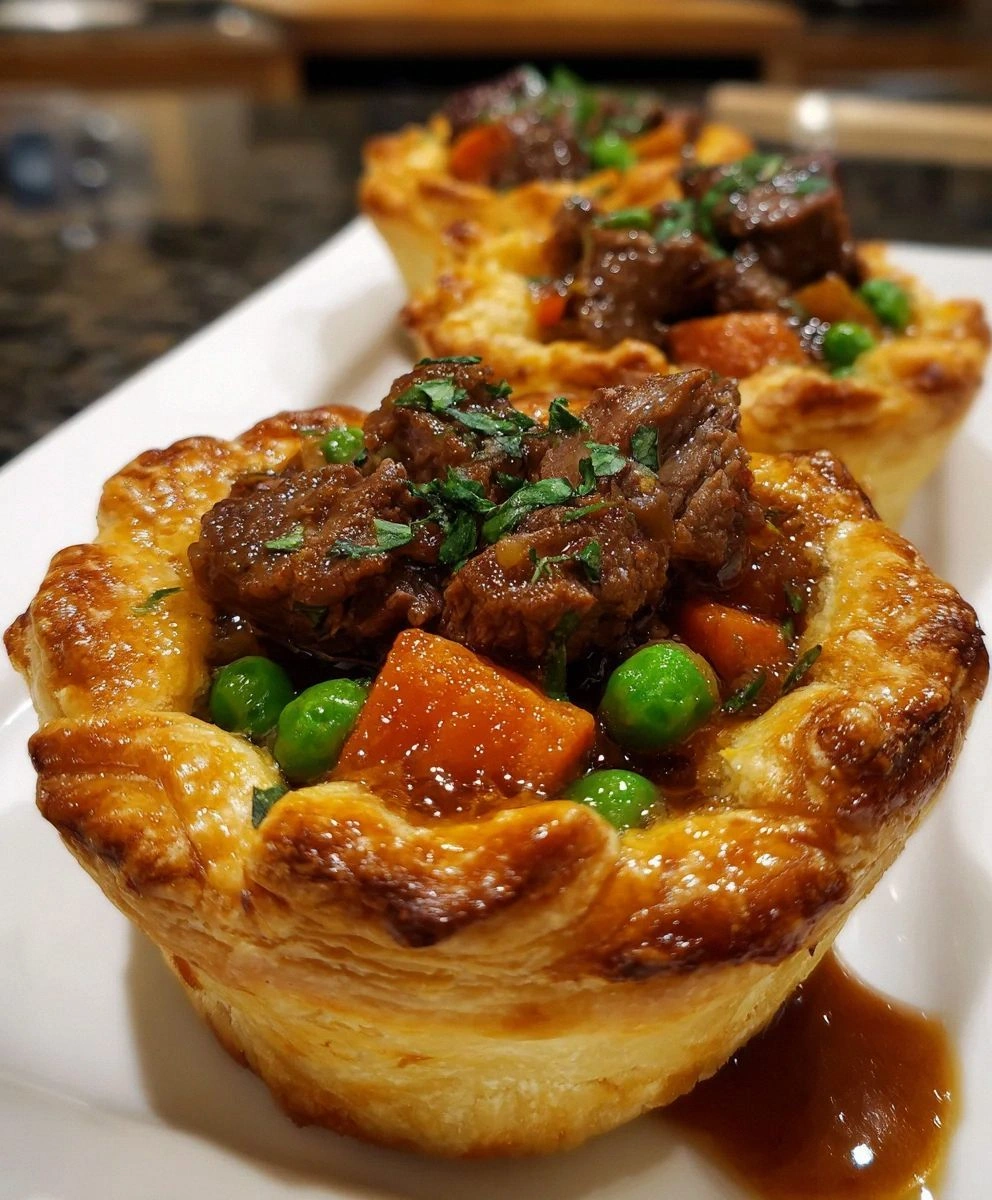
What you're about to make isn't just another cute pie recipe floating around the internet. These mini pies are essentially edible hand-warmers: flaky rough-puff jackets hiding a silky sweet-potato cloud that in turn cushions a rich, coffee-laced beef stew so deep in flavor you'd swear it had been simmering since the 1800s. The sweet potatoes bring a gentle sweetness that plays off the bitter edge of dark coffee and cocoa, while the buttery pastry flakes apart like a well-written mystery novel—every layer revealing something new. Picture pulling them from the oven, the crusts puffed and bronzed, juices bubbling through tiny vents, the whole kitchen wrapped in a perfume that could make a grown man weep into his tea towel. That first bite is pure Sunday-afternoon comfort, the kind that makes conversation slow to contented mumbling and sends at least one person back to the tray "just to check they're as good as I remember." Spoiler alert: they are.
Here's the kicker—most home cooks shy away from anything involving homemade pastry and long-simmered fillings on a weeknight, convinced they'll be trapped in the kitchen until midnight scrubbing pots. I dare you to toss that fear straight into the compost bin. My method shortcuts the usual puff-pastry rigmarole with a "rough puff" technique that gives you 90% of the lamination for 30% of the effort, and the filling is a one-pot wonder that multitasks while you roll. The sweet-potato layer isn't just plonked on top; it's whipped into a velvet cushion that prevents the bottom crust from going soggy—baker's hack, you're welcome. In short, this is hands-down the best version you'll ever make at home, and yes, that's a bold claim, but I'm prepared to duel any doubters with a spatula at dawn.
Stay with me here—this is worth it. By the end of this post you'll know how to weave Irish comfort food magic, how to troubleshoot pastry like a pro, and how to stash a secret stash of these pies in your freezer for emergencies (translation: Tuesday night Netflix binges). Let me walk you through every single step—by the end, you'll wonder how you ever made it any other way.
What Makes This Version Stand Out
Deep Flavor Shortcut: Dark coffee and a whisper of bittersweet chocolate give the beef filling the soul of a four-hour braise in half the time. Most recipes stop at broth; we're adding layers of roasted complexity that taste like you hired a French chef while nobody was looking.
Sweet-Potato Insulation: Instead of the usual potato-on-bottom that turns gummy, we whip roasted sweet potatoes into a fluffy mattress that sits between pastry and stew, keeping the crust crisp while adding a gentle sweetness you'll dream about later.
Rough-Puff Without the Rough: We fold and chill only three times—yep, three—producing strata so delicate they shatter under a fork yet sturdy enough to hold molten filling. Traditional puff purists may gasp, but their mouths will be too full to complain.
Mini Size, Maxi Joy: Handheld pies cook faster, freeze better, and eliminate the heartbreak of a soggy-bottomed family-sized pie. Plus, no slicing means no fights over who gets the corner piece with all the crust.
Make-Ahead Hero: Both the filling and pastry improve after a 24-hour fridge vacation, letting flavors meld and gluten relax. Future-you on Friday night will thank present-you on Thursday.
Crowd-Pleasing Flexibility: Carnivores swoon over the beef, sweet-potato lovers get their fix, picky kids think it's a fancy hot pocket, and your gluten-free friend can sub in a rice-flour crust without shedding a tear.
Alright, let's break down exactly what goes into this masterpiece—because great food is only as good as the ingredients you coax into the pan.
Inside the Ingredient List
The Flavor Base
Beef chuck is the MVP here, sporting enough intramuscular fat to stay juicy under pressure yet plenty of collagen to melt into velvety gravy. Skip expensive lean cuts; they'll seize up like overachievers at a yoga retreat. You want hunks, not dainty cubes—irregular edges grab the sauce and deliver little pockets of joy. When shopping, look for deep red flesh with creamy white marbling; if the butcher gives you a funny look for peering this closely, remind him you're the one paying the mortgage.
Onions, carrots, and garlic form the classic soffritto backbone, but we're letting them caramelize a shade darker than polite society suggests, teasing out nutty sweetness that anchors the whole dish. Olive oil loosens the conversation at the start, but butter jumps in later to round off rough edges with silky dairy notes. Skip either fat and you'll taste the absence like a missing bassline in your favorite song.
The Texture Crew
Sweet potatoes must be roasted, not boiled. Boiling adds water which dilutes flavor and turns your mash into baby food. Roasting concentrates sugars until the edges blister into smoky candy. Once the flesh is scooped, a knob of butter and a thread of honey whip it into a purée so smooth it could moonlight as velvet curtain in a Victorian drama.
For the pastry, all-purpose flour gives structure, salt amplifies butter's subtle nuttiness, and ice water snaps everything awake. Cold is not negotiable here; lukewarm butter smears rather than flakes, producing crusts with the personality of cardboard. If your kitchen feels like a tropical holiday, chill the bowl too—show that dough who's boss.
The Unexpected Star
Dark coffee isn't just for your morning existential crisis; its roasted bitterness marries beef like they were introduced by a matchmaker. Use whatever's left in the French press—yes, even yesterday's. Bittersweet chocolate adds further bass notes without screaming "dessert!" at you. One square is enough; we're seasoning, not making brownies. Bay leaf, thyme, and parsley refresh the top notes so the dish doesn't sink under its own delicious weight.
The Final Flourish
A single egg beaten with a splash of milk paints the pastry with a glossy bronzed armor. Without it, your pies emerge anaemic and ashamed. Maldon salt scattered post-egg adds crunch bombs that pop like tiny fireworks against the buttery shell. Optional but life-changing: a crack of black pepper on top—your guests won't identify it, but they'll register the subtle heat and wonder why every pie doesn't taste this alive.
Everything's prepped? Good. Let's get into the real action—where flour meets butter and dreams begin to rise.
The Method — Step by Step
- Roast the sweet potatoes first because patience is overrated. Halve them lengthwise, rub with a whisper of oil, and lay them cut-side down on a parchment-lined tray. Slide into a 400°F (200°C) oven for 25 minutes until the skins puff like balloons and the undersides caramelize to mahogany. Your kitchen will smell like autumn decided to throw a house party—embrace it. When cool enough to handle, scoop the sunset-orange flesh into a bowl, add butter, honey, salt, and mash until silky. Set aside; we'll circle back to this golden cloud later.
- While the sweet potatoes work, sear the beef. Heat a heavy pot until a drop of oil shimmers like a mirage. Pat the meat dry—moisture is the enemy of the Maillard reaction—and brown in batches, not crowding the pan. Listen for the fierce sizzle; that's the sound of flavor building a skyscraper. Remove each batch when the edges are dark chocolate brown and the kitchen smells like a steakhouse on Saturday night.
- In the same pot, tumble in diced onions and carrots. Scrape up the fond—the sticky brown bits—because those are free flavor tokens. Cook until the vegetables slump and the edges turn fox-coloured. Add garlic, thyme, bay, and cook another minute until the aroma wraps around your head like a wool scarf.
- Sprinkle flour over the veg and stir for two minutes. This isn't thickening vanity; it's insurance against watery filling and helps the sauce cling like velvet. Pour in beef broth, coffee, and a postage-stamp square of chocolate. Return the beef and any resting juices. Simmer gently, partly covered, for 25 minutes until the gravy naps across a spoon like slow lava. Stir occasionally so the bottom doesn't sulk.
- While the stew bubbles, make the rough puff. Whisk flour and salt in a bowl. Grate the frozen butter directly into the flour using the large holes of a box grater—think cheese, not soap shavings. Toss with fingertips, not palms, until each shard is dusted like sugared diamonds. Drizzle ice water, a tablespoon at a time, and flick the mixture with a fork until it starts to clump like wet sand. Stop before it forms a ball; shaggy is sexy here.
- Tip the dough onto a floured counter and pat into a crude rectangle. Roll away from you into a long strip, then fold the top third down and bottom third up like a business letter. Give it a quarter turn, roll again, fold again. Repeat twice more for a total of three folds, flouring lightly as needed. Wrap in plastic and chill 20 minutes while you check social media or dance to The Pogues—your call.
- Heat the oven to 400°F (200°C) and line two trays with parchment. Roll the chilled dough to ⅛-inch thickness—thin enough to be elegant, thick enough to be brave. Using a 4-inch cutter (or mug), stamp out circles, re-rolling scraps once; overworked dough sulks and shrinks. Lay half the circles on the trays and spoon a teaspoon of sweet-potato mash into each center, creating a gentle nest. Top with a heaped tablespoon of beef stew, letting gravy kiss the edges because those bits caramelize into savory candy.
- Stretch remaining dough circles ever so slightly to make lids, press edges to seal, then crimp with a fork for that charming "I tried harder than I did" look. Poke two tiny vents with a toothpick so steam can escape rather than staging anarchy inside. Brush with egg wash, sprinkle with flaky salt and a whisper of cracked pepper. Slide trays into the oven for 20–22 minutes until the pies balloon like proud chests and the crusts turn the color of polished mahogany.
- Cool five minutes on the tray—yes, five, I timed it—because molten gravy is a lesson in patience nobody enjoys learning twice. Transfer to a platter and watch them disappear faster than free pints at a pub lock-in. Serve with something green so you can claim nutritional balance; honestly, these pies are perfectly happy solo.
That's it—you did it. But hold on, I've got a few more tricks that'll take this to another level...
Insider Tricks for Flawless Results
The Temperature Rule Nobody Follows
Hot filling + cold pastry = steam = soggy bottoms. Let your beef stew cool until just warm before assembling; the sweet-potato layer should be room temperature too. If you're in a rush, spread both on sheet pans and pop them in the freezer for ten minutes. Pastry goes on cold, hits a hot oven, and puffs like a dream while the filling finishes heating through. Your future self will write thank-you notes.
Why Your Nose Knows Best
Don't trust timers blindly; trust aromas. When the pies are nearly done, the scent shifts from buttery to nutty-caramel, signalling that the Maillard reaction is sprinting for the finish line. If you wait for deep brown colour alone, carry-over cooking can push them past perfection while they cool. Pull them when they smell like the best croissant you've ever met wearing a beef perfume—trust me, you'll know.
The 5-Minute Rest That Changes Everything
I get it, you're hungry, the pies are singing their siren song, but five minutes on a wire rack allows steam to redistribute without turning the bottoms damp. Think of it as a pie spa moment. During this time the gravy thickens slightly and the pastry sets, so the first bite is flaky, not flabby. If you skip this, you'll burn your tongue and the crust will slump like a disappointed parent.
Crimp Like You Mean It
Those fork marks aren't just cute; they weld the top and bottom together, preventing the filling from erupting like a tiny pastry volcano. Press firmly through both layers, then give a gentle tug outward to create a slight lip—this prevents the seal from unzipping in the oven. If you're feeling fancy, fold the edge over itself before crimping for bakery-level polish.
Creative Twists and Variations
This recipe is a playground. Here are some of my favorite ways to switch things up:
Stout & Cheddar Remix
Swap the coffee for a half-cup of Irish stout and fold a handful of sharp shredded cheddar into the sweet-potato mash. The beer's malty bitterness pairs with the tangy cheese like they were born to duet. Top the pies with a pinch more cheese before baking for a bronzed hat that smells like rugby club heaven.
Smoky Bacon & Guinness Edition
Render diced streaky bacon until crisp, then use the fat to brown the beef. Replace half the broth with Guinness and add a teaspoon of smoked paprika. The pies emerge with a campfire soul that makes grown men close their eyes and sigh. Vegetarians, look away.
Spicy Cork County Kick
Stir a diced fresh chilli and a teaspoon of Dijon mustard into the stew for a warming back-of-throat heat that sneaks up like a plot twist. Sweet potato tempers the fire, creating a sweet-heat tango that keeps you reaching for "just one more." Serve with a pint of cold cider for maximum effect.
Vegan Dublin Delight
Replace beef with chickpeas simmered in the same gravy; swap butter for vegan block and use oat milk for egg wash. The result is so satisfying carnivores won't even whinge. Add a teaspoon of miso for extra umami depth that tricks taste buds into thinking "meat" without the meat.
Breakfast Pie Surprise
Make mini hand-pies using the same pastry but fill with black pudding, apple, and a quail egg. Bake until the egg sets runny-yolk and the pastry bronzes. Breakfast, brunch, or brinner—no rules, just delicious anarchy.
Storing and Bringing It Back to Life
Fridge Storage
Cool pies completely, then refrigerate in an airtight container for up to four days. Separate layers with parchment to prevent the dreaded crust-sweat. To reheat, pop into a 350°F (175°C) oven for 8–10 minutes. Microwaves murder flakiness—don't do it unless you enjoy chewing on rubbery sadness.
Freezer Friendly
Freeze unbaked or baked pies on a tray until solid, then transfer to a zip bag with as much air removed as possible. They'll keep for two months before freezer funk sets in. Bake from frozen as per the hack above, or thaw baked pies overnight in the fridge and refresh in the oven. Pro move: label the bag because mystery freezer objects haunt everyone eventually.
Best Reheating Method
Oven is king, but if you're desk-bound and desperate, a toaster oven works. Wrap pies loosely in foil to prevent over-browning, then uncover for the last two minutes to crisp. Add a tiny splash of water to the tray; the gentle steam revives the gravy without sogging the base. Your colleagues will hover like seagulls—share or hide, your call.