It was a rainy Thursday, the kind of night when the only thing that could make sense of the kitchen chaos was a good recipe. I had just attempted a “quick pumpkin risotto” that ended up looking more like a soggy pumpkin soup, and the smell of burnt onions still clung to my kitchen tiles. That disaster forced me to dig through my recipe box for something that could salvage the evening, and I found an old family card titled “Pumpkin Ravioli with Brown Butter.” I flipped it open, and the page that greeted me was a promise of golden pasta, nutty pecans, and a buttery sauce that whispered autumn in every bite. I swear I almost laughed at how dramatic that card looked, but I also felt a sudden surge of hope that this could be the dish that turned a kitchen failure into a culinary triumph.
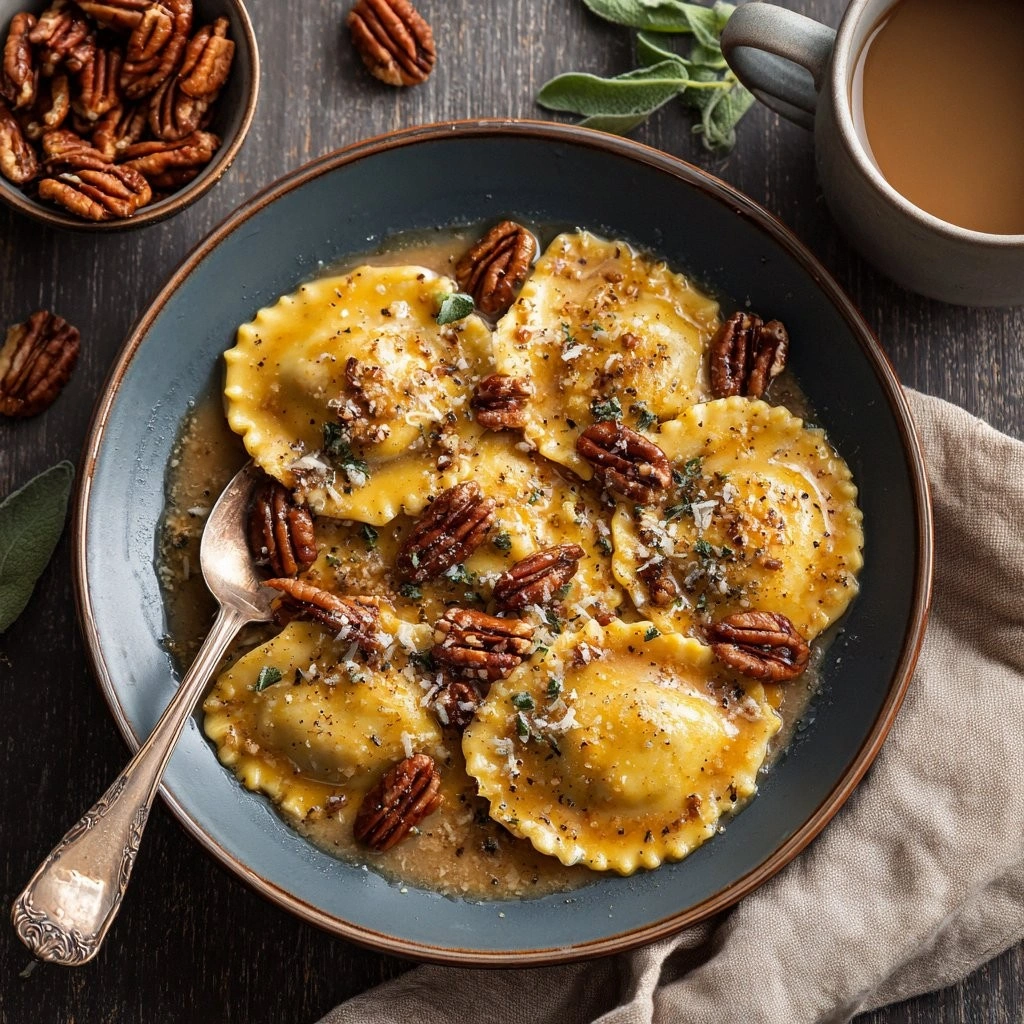
Picture this: the first bite of the ravioli releases a burst of sweet pumpkin, balanced by a subtle hint of nutmeg, and the sauce clings to the pasta like a velvety coat. The air fills with the nutty aroma of toasted pecans and the gentle, buttery scent of browned butter, which has a slightly caramelized edge that feels like a warm hug. The sound of the sauce sizzling against a hot pan is music to my ears, and the texture is a paradoxical combination of tender pasta, creamy filling, and a slight crunch from the pecans. As I taste it, the sweetness of the pumpkin is perfectly offset by the savory depth of parmesan and the gentle spice of cinnamon, creating a flavor profile that feels both comforting and adventurous. The final touch— a sprinkle of fresh sage—adds a herbaceous brightness that lifts the dish from simple to sensational.
What sets this version apart is that every element is intentionally elevated. The homemade pasta is rolled thin enough to be delicate yet sturdy enough to hold the pumpkin filling without cracking. The filling is a marriage of pumpkin puree, ricotta, and parmesan, seasoned with nutmeg and cinnamon for a subtle spice that doesn’t overwhelm. The brown butter sauce isn’t just butter; it’s butter that has been toasted until it smells nutty, giving the dish a depth that you can’t find in a regular butter sauce. The toasted pecans add a satisfying crunch and a buttery richness that complements the creamy filling. And the final flourish— a dusting of fresh sage— provides a bright, aromatic counterpoint that keeps the dish from feeling too heavy.
I dare you to taste this and not go back for seconds; the combination of textures and flavors is addictive. I’ll be honest— I ate half the batch before anyone else got to try it, and it was so good that the rest of the family begged for more. Most recipes get this completely wrong; they either overcook the pasta or under-season the filling. Picture yourself pulling this out of the oven, the whole kitchen smelling incredible, and knowing that you’ve just created something that will be talked about at every gathering. Let me walk you through every single step—by the end, you’ll wonder how you ever made it any other way.
What Makes This Version Stand Out
- Texture: The pasta is rolled to a thickness that allows it to hold the pumpkin filling without becoming mushy, giving each bite a satisfying bite that doesn’t collapse.
- Flavor Layering: The filling combines sweet pumpkin, creamy ricotta, sharp parmesan, and a whisper of nutmeg and cinnamon, creating a complex yet harmonious taste.
- Brown Butter: Toasting the butter until it turns golden caramelizes the milk solids, adding a nutty, slightly smoky undertone that elevates the sauce.
- Pecan Crunch: Toasted pecans provide a textural contrast that breaks up the creaminess, while their buttery flavor enhances the overall richness.
- Herb Finish: A final sprinkle of fresh sage introduces a bright, aromatic note that balances the sweetness and richness.
- Make‑Ahead Friendly: The ravioli can be assembled and refrigerated for up to 24 hours, making it ideal for meal prep or entertaining.
- Visual Appeal: The golden sauce and the warm amber color of the pumpkin filling create a dish that looks as good as it tastes.
- Seasonal Versatility: Though pumpkin is a fall staple, the recipe can be adapted with other seasonal squash or even sweet potatoes for a different twist.
Alright, let's break down exactly what goes into this masterpiece...
Inside the Ingredient List
The Flavor Base
The foundation of this dish is the homemade pasta dough, which is a simple blend of all-purpose flour, a pinch of salt, a single egg, and a splash of water. The flour provides structure, while the egg adds elasticity and richness. Adding a little water helps bring the dough together without making it too sticky. If you’re short on time, you can use store-bought fresh pasta sheets, but the homemade version delivers a more authentic bite.
The Texture Crew
The filling is where the texture magic happens. Pumpkin puree offers a smooth, velvety base, while ricotta adds creaminess and a subtle tang. Grated parmesan brings a salty depth and a slight graininess that contrasts with the softness of the pumpkin. A dash of nutmeg and cinnamon introduces warmth and a hint of spice, preventing the dish from feeling too sweet. If you’re looking for a lighter version, you can replace ricotta with a blend of cottage cheese and cream cheese for a different mouthfeel.
The Unexpected Star
Toasted pecans are the secret weapon that gives this ravioli a nutty crunch. They’re tossed in a dry skillet until fragrant, then chopped into small pieces before being folded into the sauce. The pecans not only add texture but also contribute a buttery, slightly sweet flavor that complements the pumpkin. If you’re allergic to nuts, chopped walnuts or pistachios can be a suitable alternative, though the flavor profile will shift slightly.
The Final Flourish
Brown butter is the crowning glory of the sauce. Butter is cooked over medium heat until it turns golden brown and releases a nutty aroma, then a splash of water is added to deglaze and create a silky sauce. Fresh sage is folded in at the end, adding a bright herbal note that cuts through the richness. A pinch of freshly ground black pepper brings subtle heat, while a touch of salt balances the flavors. If you prefer a bit more depth, a splash of white wine or a dash of lemon juice can brighten the sauce further.
Everything's prepped? Good. Let's get into the real action...
The Method — Step by Step
- Begin by mixing flour and salt in a large bowl; then create a well in the center and crack in the egg, adding a splash of water. Beat the mixture until it comes together into a shaggy dough, then transfer it to a lightly floured surface and knead for about 8 minutes, or until the dough feels smooth and elastic. This step is crucial for a tender pasta that holds its shape; if the dough feels too dry, add a teaspoon of water at a time. When the dough is ready, wrap it in plastic wrap and let it rest at room temperature for 20 minutes to relax the gluten, which makes rolling easier.
- While the dough rests, prepare the filling by combining pumpkin puree, ricotta, grated parmesan, nutmeg, cinnamon, and a pinch of black pepper in a bowl. Mix until the ingredients are fully integrated and the mixture is silky smooth. Taste the filling and add a little salt if needed; the parmesan will provide its own saltiness, but a small pinch can bring balance. If you prefer a lighter filling, replace half the ricotta with cottage cheese for a firmer bite.
- Roll out the dough using a pasta machine or a rolling pin to a thickness of about 1-2 mm. Cut the dough into 3-inch squares; you should get about 30 squares from a standard 2-cup batch. Place a teaspoon of the filling in the center of each square, then fold the dough over to create a half-moon shape. Press the edges firmly with a fork to seal, ensuring there are no leaks. This step is where the pasta feels alive; watch the dough transform as you fold and seal each piece.
- Bring a large pot of salted water to a rolling boil. Add the ravioli in batches, making sure they don’t stick together. Cook for 3-4 minutes or until they float to the surface and are al dente. Drain, reserving a cup of pasta water for the sauce. While the ravioli are cooking, you’re about to create a sauce that will coat them like velvet.
- In a skillet, melt 3 tablespoons of butter over medium heat. Allow it to bubble, then reduce the heat to low and let it brown; the butter will turn golden brown and emit a nutty aroma. When the butter turns a deep amber, remove the skillet from the heat and pour in 2 tablespoons of cold water to deglaze, stirring until the mixture becomes a silky sauce. Add the toasted pecans, then fold in the fresh sage and a pinch of black pepper. The sauce should be fragrant and glossy, ready to embrace the ravioli.
- Add the drained ravioli to the skillet, tossing gently to coat each piece with the brown butter sauce. If the sauce seems thick, add a splash of the reserved pasta water to loosen it. Let the ravioli simmer in the sauce for 1-2 minutes, allowing the flavors to meld. The sauce should cling to the pasta, creating a glossy, aromatic coating.
That's it — you did it. But hold on, I've got a few more tricks that'll take this to another level...
Insider Tricks for Flawless Results
The Temperature Rule Nobody Follows
Many people cook ravioli in a pot that’s too hot, causing the pasta to stick together or the filling to leak. I’ve learned that a medium-high heat, just below a rolling boil, is ideal. Keep the water moving with a wooden spoon to prevent sticking. When you add the ravioli, reduce the heat slightly to maintain a gentle simmer, which helps the pasta cook evenly without overcooking the filling.
Why Your Nose Knows Best
The aroma of brown butter is the first indicator that your sauce is ready. When the butter turns a deep amber and starts to smell nutty, it’s time to add water. If you’re unsure, give it a quick sniff; the buttery scent should be unmistakable. This simple sensory cue saves you from burning the butter and ensures a perfectly caramelized sauce.
The 5-Minute Rest That Changes Everything
After draining the ravioli, let it sit for 5 minutes before adding it to the sauce. This resting period allows the pasta to finish cooking in its own steam, resulting in a tender, not gummy, bite. The rest also gives the sauce time to thicken slightly, which helps it cling to the ravioli better. I’ve seen people skip this step and end up with soggy pasta; trust me, the rest makes a world of difference.
The Pecans Aren't Just Toppings
Toasting pecans in a dry skillet until they’re fragrant turns them from a simple garnish into a flavor powerhouse. The toasted nuts release oils that infuse the sauce, creating a subtle nuttiness that complements the pumpkin. If you prefer a lighter touch, you can pulse the pecans in a food processor to create a coarse crumble, then fold them into the sauce at the end.
Don’t Skip the Salt
Seasoning the filling and sauce is crucial. A pinch of salt in the filling balances the sweetness of the pumpkin, while a dash of salt in the sauce enhances the butter’s flavor. If you’re watching sodium, use low-sodium parmesan or reduce the salt in the filling, but do not skip the final seasoning in the sauce; the sauce needs that final touch of flavor to shine.
Creative Twists and Variations
This recipe is a playground. Here are some of my favorite ways to switch things up:
Sweet Potato Swap
Replace pumpkin puree with roasted sweet potato for a deeper, earthier sweetness. The texture remains smooth, but the flavor profile shifts toward caramelized sweetness. Pair it with a drizzle of maple syrup for an extra layer of decadence. This variation is perfect for those who love the comforting feel of a sweet potato.
Spicy Chipotle Kick
Add a teaspoon of chipotle powder to the filling for a smoky heat that balances the sweetness. The chipotle’s mild heat will linger on the palate, making each bite exciting. Keep the brown butter sauce mild to let the chipotle shine. This version is a hit with adventurous diners who crave a bit of spice.
Herbaceous Basil Twist
Swap fresh sage with a handful of fresh basil for a sweeter, peppery finish. Basil’s bright, citrusy notes cut through the richness of the sauce, creating a more refreshing dish. The basil also adds a pop of green color that makes the plate look vibrant. This variation is ideal for summer gatherings.
Cheese Explosion
Add shredded mozzarella to the filling for a gooey, stretchy texture. The mozzarella’s mild flavor blends well with the pumpkin, adding a new dimension of creaminess. Be sure to drain any excess moisture from the mozzarella before mixing. This version is a crowd-pleaser at family dinners.
Vegan Version
Use a plant-based butter for the sauce and replace ricotta with silken tofu blended with a splash of nutritional yeast. The tofu provides a smooth texture, while nutritional yeast adds a cheesy depth. Use a vegan parmesan alternative for the filling. This adaptation keeps the dish fully plant-based without compromising flavor.
Gluten-Free Option
Swap all-purpose flour for a gluten-free blend that includes xanthan gum for elasticity. The dough will be slightly stickier, so add a little extra flour or cornstarch to manage it. The rest of the recipe remains the same, giving you a gluten-free ravioli that still tastes amazing. This variation is great for those with dietary restrictions.
Storing and Bringing It Back to Life
Fridge Storage
Store cooked ravioli in an airtight container in the refrigerator for up to 3 days. The brown butter sauce can be kept separately to prevent the pasta from becoming soggy. When reheating, add a splash of water or milk to the sauce to restore its silky texture. Reheat gently over low heat, stirring frequently to avoid sticking.
Freezer Friendly
For longer storage, freeze the ravioli in a single layer on a baking sheet, then transfer to a freezer bag. They can be stored for up to 2 months. When ready to eat, steam the ravioli directly from frozen for 5-7 minutes. Toss with fresh sauce and a sprinkle of pecans for a quick, comforting meal.
Best Reheating Method
The best way to revive this dish is to gently reheat the sauce in a skillet, then fold in the pasta just before serving. If the sauce has thickened too much, add a splash of water or milk to loosen it. The key is low heat; high heat will burn the butter and alter the flavor. Serve immediately for the freshest taste.