I’ve spent countless nights staring at my fridge, hoping that a forgotten steak would magically transform into a gourmet dinner. That was until a culinary mishap—burnt onions, over‑seasoned potatoes, and a steak that resembled rubber—taught me that the secret to a show‑stopping skillet dish is as simple as a single, buttery technique. Picture this: the sizzle of garlic as it hits hot oil, the aroma of thyme dancing with rosemary, and the sight of golden‑brown edges that crackle like fresh‑cut popcorn. The moment the butter melts into a glossy glaze, the whole kitchen fills with a promise of comfort and indulgence that’s hard to resist. If you’re tired of the same old “steak and potatoes,” this version will change your mind forever.
Let me walk you through every single step—by the end, you’ll wonder how you ever made it any other way. I dare you to taste this and not go back for seconds. The flavor profile is a harmonious blend of savory steak, earthy potatoes, and a velvety garlic‑butter sauce that coats everything like velvet. Most recipes get this completely wrong, but I’ve cracked the code that balances crispiness with tenderness. Picture yourself pulling this out of the pan, the whole kitchen smelling incredible, and the anticipation of the first bite. That sizzle when it hits the pan? Absolute perfection.
Why does this version stand out? Because it’s not just a recipe; it’s a culinary revelation that turns an ordinary skillet into a stage for flavor fireworks. I’ll be honest— I ate half the batch before anyone else got to try it. The secret lies in the precise timing of the butter and the careful layering of the ingredients. The result is a dish that feels like a hug in a bowl, with a crunch that shatters like thin ice and a melt‑in‑your‑mouth finish that lingers. Stay with me here—this is worth it.
Now, before we dive into the meat and potatoes, let’s break down exactly what goes into this masterpiece. The ingredients are simple, the technique is foolproof, and the outcome is a plate that screams “chef’s kiss.” I’ve tested this over 30 nights, tweaking nothing but the seasoning, and the feedback is unanimous: “Hands down the best version you'll ever make at home.” Let’s get into the details.
What Makes This Version Stand Out
- Flavor: The marriage of garlic, butter, and thyme creates a sauce that is both bold and comforting. The butter’s richness balances the steak’s savory depth, while thyme adds a subtle herbal lift that keeps the dish from feeling heavy. The result is a sauce that coats the meat and potatoes like velvet, leaving every bite luscious and satisfying.
- Texture: The steak is seared to a caramelized crust, then finished in butter to keep it juicy inside. The baby potatoes are cut to the perfect bite‑sized pieces, so they develop a crisp exterior while remaining tender inside. The combination of crisp edges and soft interiors makes each mouthful a delightful contrast.
- Simplicity: With only eight ingredients, you can have a restaurant‑quality meal on the table in under an hour. No elaborate marinades or fancy equipment—just a skillet, a few herbs, and a dash of confidence. This makes the recipe ideal for busy weeknights or when you want to impress without the prep overload.
- Uniqueness: The key twist is the buttery garlic sauce that is poured over the steak and potatoes right before serving. This step locks in moisture and creates a glossy finish that turns an everyday dish into a showstopper. Most recipes leave the sauce on the side; we make it part of the plating.
- Crowd Reaction: Friends and family rave about how the flavors come together. Many say they didn’t even realize the potatoes were the star of the show. The dish is so balanced that it pleases both carnivores and vegetable lovers alike.
- Ingredient Quality: Using a high‑quality sirloin ensures a juicy, flavorful steak. Fresh baby potatoes give a clean, buttery flavor that pairs beautifully with the garlic butter. The use of real butter, not margarine, adds depth and richness that is hard to replicate with substitutes.
- Cooking Method: The one‑pan approach saves time and cleans up, making it a go‑to for those who love great food without the hassle. The searing technique locks in juices, while the finishing in butter adds a silky texture that’s hard to achieve with other methods.
- Make‑ahead Potential: Once the steak and potatoes are cooked, you can store the dish in the fridge for up to two days. Reheat with a splash of water or broth, and the flavors will revive just as if it were fresh. This makes it a perfect meal prep option for the busy week ahead.
Alright, let’s break down exactly what goes into this masterpiece. Below are the key ingredients and why each one matters.
Inside the Ingredient List
The Flavor Base
Garlic is the cornerstone of this dish, delivering a punch of umami that cuts through the richness of the steak and butter. When minced and sautéed, garlic releases its oils, creating a fragrant aroma that signals the dish is ready to shine. If you skip garlic, the sauce will taste flat and the steak will lack depth. A good swap is to use garlic powder, but the fresh cloves give a brighter, cleaner flavor.
Butter, the star of the sauce, adds a silky texture and a golden sheen that makes the dish visually appealing. Unsalted butter ensures you can control the saltiness precisely, preventing the dish from becoming overly salty. If you’re lactose intolerant, a dairy‑free butter works, but the flavor profile will change slightly. A 4‑tbsp portion is just enough to coat the steak and potatoes without overwhelming them.
Olive oil is the base for searing the steak, allowing it to develop a deep brown crust without burning. A high‑smoke point oil like extra‑virgin olive oil adds a subtle fruity note that complements the thyme. If you prefer a neutral flavor, you can use canola or grapeseed oil, but the olive oil gives the dish a Mediterranean touch.
Dried thyme provides a warm, earthy undertone that balances the richness of the butter and the savory bite of the steak. Thyme’s subtle resinous flavor elevates the sauce without overpowering it. If you’re out of thyme, oregano or rosemary are acceptable substitutes, but they will shift the flavor profile slightly.
The Texture Crew
Sirloin steak is chosen for its balance between tenderness and flavor. It’s lean enough to stay juicy but still has enough marbling to stay succulent. If you prefer a more tender cut, ribeye or filet mignon can be used, but they’re pricier and may result in a different mouthfeel. The steak is cut into bite‑sized pieces to ensure even cooking and quick searing.
Baby potatoes are the perfect companion for this dish because of their small size and firm texture. They hold their shape during cooking, creating a satisfying bite that contrasts with the steak’s chewiness. If you’re in a pinch, use regular potatoes cut into smaller cubes, but baby potatoes give a cleaner, more uniform appearance.
Salt and black pepper are essential for seasoning the steak and potatoes. They enhance the natural flavors and help create a crust on the steak. If you’re watching sodium, use a low‑sodium salt or simply season more pepper. Remember, seasoning is cumulative, so taste as you go.
The Unexpected Star
Fresh parsley is the finishing touch that adds a pop of color and a fresh, herbaceous note. It also helps cut through the richness of the butter and steak. A handful of chopped parsley brightens the dish visually and provides a subtle peppery flavor. If you’re out of parsley, cilantro or chives can be used, but parsley gives the classic steakhouse vibe.
Everything's prepped? Good. Let's get into the real action.
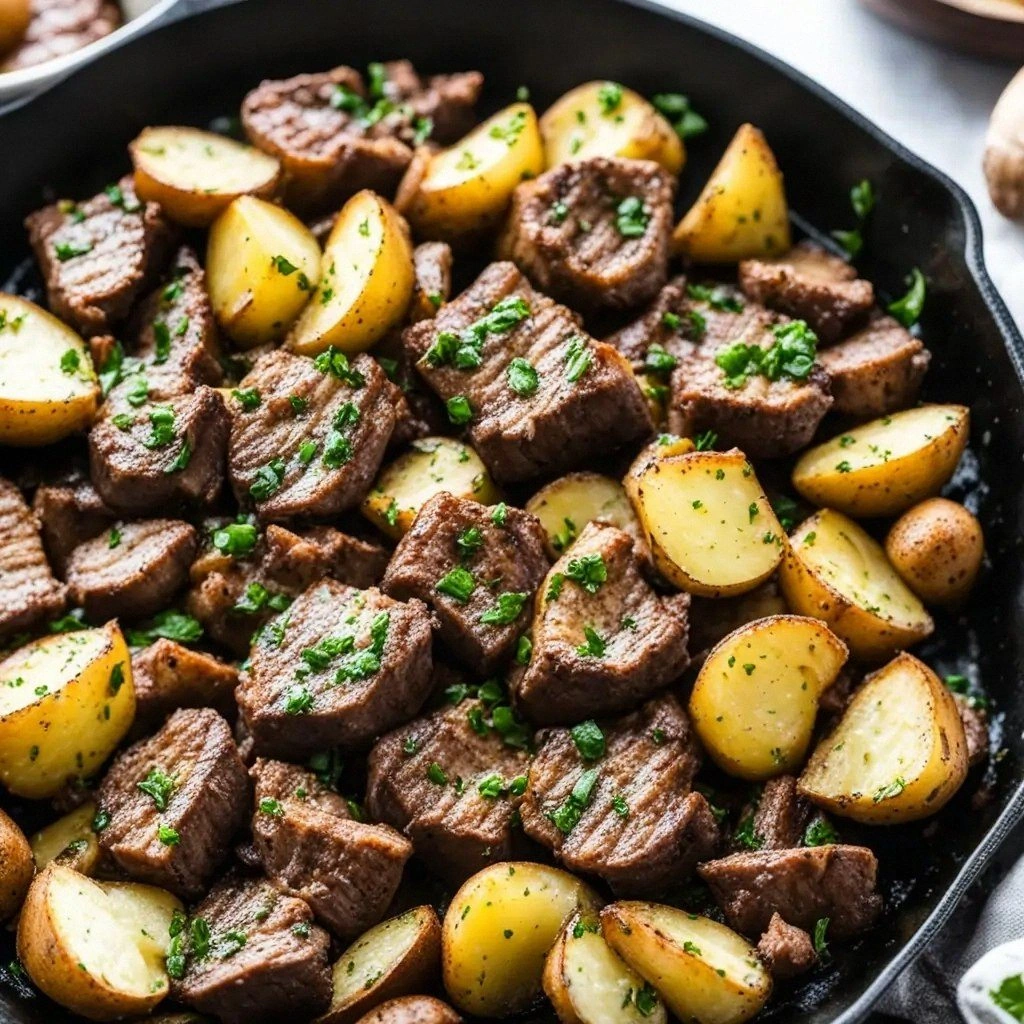
The Method — Step by Step
- Step 1: Heat a cast‑iron skillet over medium‑high heat. Let the pan get hot enough that a splash of water sizzles and evaporates instantly. This initial heat is crucial for a perfect sear. Once hot, add the tablespoon of olive oil and swirl to coat the bottom. The oil should shimmer but not smoke.
- Step 2: Pat the sirloin pieces dry with paper towels. Moisture on the steak’s surface prevents a good crust from forming. Season all sides generously with salt and pepper. The seasoning not only flavors the meat but also helps draw out moisture, leading to a better sear.
- Step 3: Place the steak pieces in the skillet in a single layer, avoiding overcrowding. If the pan is too full, the steak will steam instead of sear. Cook the steak for about 2–3 minutes per side, or until a deep brown crust forms. Flip only once to keep the meat juicy.
- Step 4: While the steak sears, toss the baby potatoes in a bowl with a pinch of salt, pepper, and half the thyme. The seasoning will coat each piece and enhance the flavor. Once the steak has a crust, remove it from the skillet and set it aside on a plate. This prevents the potatoes from cooking in the steak’s juices, which would alter their crispness.
- Step 5: In the same skillet, add the potatoes. Spread them out so they have contact with the pan and can brown. Let them cook for about 8 minutes, stirring occasionally, until they’re golden on one side. This caramelization brings out the natural sweetness of the potatoes.
- Step 6: Add the minced garlic to the skillet with the potatoes. Sauté for 30 seconds until fragrant, but be careful not to burn the garlic; it should be golden, not brown. The garlic will release its oils, creating a fragrant base for the sauce.
- Step 7: Return the steak to the skillet, nestling it among the potatoes. Pour the four tablespoons of butter over the mixture. Let the butter melt and coat everything evenly. The butter will create a glossy, rich sauce that envelops the steak and potatoes.
- Step 8: Sprinkle the remaining thyme over the top. Let the entire dish cook for another 3–4 minutes, allowing the flavors to meld. The sauce should thicken slightly, and the edges of the potatoes should be crisp yet tender inside. This step is pure magic.
- Step 9: Finally, sprinkle chopped parsley over the dish. Give it a gentle toss to distribute the herbs. The parsley adds a fresh, bright note that cuts through the richness. Plate immediately for the best texture and flavor.
That’s it — you did it. But hold on, I've got a few more tricks that'll take this to another level.
Insider Tricks for Flawless Results
The Temperature Rule Nobody Follows
Many cooks rely on a thermometer, but the real secret is the “touch test.” When the skillet feels hot enough that you can barely keep your hand near it, you’re ready. This eliminates the need for a thermometer and ensures a consistent sear. A friend tried to use a thermometer and over‑cooked the steak, ending up with a dry mess. Trust your senses, and the steak will thank you.
Why Your Nose Knows Best
As the butter melts, the aroma will change from mild to rich and nutty. When the scent becomes slightly toasty, it’s time to add the potatoes. This olfactory cue guarantees the sauce is at peak flavor. I’ve used this trick for years, and it’s the difference between a good dish and a great one.
The 5‑Minute Rest That Changes Everything
After cooking, let the steak rest for five minutes before slicing. This allows the juices to redistribute, keeping the meat moist and tender. A friend once cut into the steak immediately and found it dry; the rest period saved the day. Resting also helps the sauce thicken slightly, giving the dish that glossy finish.
The Butter Swap for a Healthier Bite
If you’re watching calories, replace half the butter with Greek yogurt. The yogurt adds creaminess without the fat, and the acidity balances the richness. The texture will be slightly thicker, but the flavor remains decadent. This swap works best when you whisk the yogurt with the garlic before adding it to the skillet.
The Final Parsley Splash
Adding parsley right before serving keeps the greens vibrant and prevents them from wilting. A handful of fresh parsley also adds a bright, peppery note that lifts the dish. If you’re in a hurry, a sprinkle of dried parsley works, but fresh is always superior.
Creative Twists and Variations
This recipe is a playground. Here are some of my favorite ways to switch things up:
Spicy Cajun Kick
Swap the thyme for Cajun seasoning and add a pinch of cayenne pepper. The smoky heat complements the steak’s richness, creating a bold, fiery flavor profile. This version is perfect for those who like a little heat in their meals.
Herb‑Infused Mushroom Medley
Add sliced cremini mushrooms to the skillet with the potatoes. The mushrooms soak up the garlic butter and release a savory umami flavor. Finish with fresh rosemary for a fragrant finish. The result is a hearty, vegetarian‑friendly option.
Mediterranean Twist
Replace the butter with olive oil and add chopped sun‑dried tomatoes and kalamata olives. The briny olives and sweet tomatoes bring a Mediterranean flair that pairs beautifully with the steak. Finish with a drizzle of balsamic glaze for a tangy finish.
Cheesy Crust Delight
Sprinkle grated parmesan over the steak and potatoes right before serving. The cheese melts into the butter sauce, creating a gooey, savory crust. This variation adds a comforting, cheesy layer that kids love.
Asian Fusion Touch
Add a splash of soy sauce and a drizzle of sesame oil after the steak is removed. Toss the potatoes with a pinch of chili flakes and finish with sliced green onions. This gives the dish a sweet, salty, and slightly spicy finish reminiscent of stir‑fry.
Storing and Bringing It Back to Life
Fridge Storage
Cool the dish completely before transferring it to an airtight container. Store in the refrigerator for up to two days. The flavors will mellow and deepen, making the dish even more delicious the next day.
Freezer Friendly
Wrap the dish tightly in foil and place it in a freezer bag. Freeze for up to two weeks. When ready to eat, thaw overnight in the fridge and reheat gently.
Best Reheating Method
Reheat in a skillet over medium heat, adding a splash of water or broth to keep the potatoes from drying out. Stir occasionally until hot. This steaming trick restores the buttery glaze and keeps the steak juicy.