I still remember the first time I made Guinness Beef Barley Stew. It was one of those grey, drizzly afternoons where the sky looked like it had given up on color, and my kitchen smelled like regret and burnt toast from an earlier failed baking experiment. I was craving something that hugged me from the inside out — not just food, but a full-on emotional blanket. I had a half-drunk bottle of Guinness left over from a weekend chili attempt, a sad-looking carrot, and a hunk of beef chuck that was giving me side-eye every time I opened the fridge. I threw them together with the reckless optimism of someone who has nothing to lose and ended up with something so outrageously good that I stood over the pot eating it straight from the ladle, swearing under my breath because I knew I’d never be able to replicate the magic. Spoiler: I did replicate it. And then I made it better. This is that version — the one that made my neighbor knock on my door asking if I was running a secret underground bistro.
What makes this stew different from the sea of sad, watery beef stews out there? For starters, it doesn’t taste like someone waved a beef bouillon cube over hot water and called it a day. It’s rich, glossy, and so deeply flavored that you’ll swear there’s a secret ingredient you can’t quite name (spoiler: it’s the Guinness, but we’ll get to that). The barley drinks up the stout like it’s been waiting its whole life for this moment, turning plump and chewy while thickening the broth into something that clings to your spoon like velvet. The vegetables don’t just sit there looking pretty — they melt into the sauce, adding layers of sweetness and earthiness that make each bite taste like it’s been simmering for days. And the beef? Oh, the beef. We’re talking fork-tender chunks that fall apart at the mere suggestion of pressure, with caramelized edges that taste like they’ve been kissed by a fire made of dreams and patience.
I’ve made this stew for picky toddlers, cranky in-laws, and that one friend who claims they “don’t like stew” (they ate three bowls). It’s the kind of recipe that turns casual acquaintances into people who casually drop by with Tupperware and hopeful eyes. Picture yourself pulling this out of the oven, the whole kitchen smelling like Ireland and happiness, the steam curling up like it’s posing for a food magazine shoot. You’ll want to Instagram it, but you’ll be too busy shoveling it into your face. And here’s the kicker — it’s actually stupidly easy. No fancy techniques, no ingredients you have to Google, no obscure kitchen gadgets that collect dust. Just real food, real flavor, and a real excuse to open a beer at 3 p.m. on a Tuesday.
Let me walk you through every single step — by the end, you’ll wonder how you ever made it any other way.
What Makes This Version Stand Out
- Depth Bomb: Guinness doesn’t just add beer flavor — it brings malty, bittersweet complexity that makes the beef taste like it’s been aging in a castle cellar for centuries. Most recipes use a splash and call it a day. We use the whole bottle and let it reduce until it’s practically a beef stout syrup.
- Barley Brilliance: Pearl barley isn’t just filler — it’s the stealth thickener that turns broth into silky gravy. It releases starch as it simmers, giving you that restaurant-quality gloss without flour or cornstarch slurries that taste like elementary school paste.
- Vegetable Rainbow: Carrots, parsnips, celery, potatoes, AND rutabaga. Most stews phone it in with just carrots and potatoes. This crew brings sweetness, earthiness, and texture that keeps every bite interesting. It’s like a root vegetable party and everyone’s invited.
- Browning Religion: We don’t just brown the beef — we take it to the edge of burnt, creating fond so dark and flavorful it could be a coffee substitute. That crust is liquid gold, and we deglaze every last speck with the Guinness. Skip this and you’ll have sad gray meat water. Don’t be that person.
- Low and Slow Magic: Two hours at a lazy simmer. Not one hour, not “until it’s sort of tender.” We’re breaking down collagen into gelatin here, transforming tough chuck into spoon-soft luxury. Your house will smell so good the mailman will linger.
- Make-Ahead Champion: This stew laughs at time. Make it Sunday, eat it Wednesday, and it’s even better. The flavors meld like old friends who’ve been through war together. Freeze half for future you, who will thank present you profusely.
Inside the Ingredient List
The Flavor Base
Beef chuck is the undisputed king of stew meats. Forget those prissy pre-cut “stew beef” cubes that cook up dry and stringy. You want a big hunk of chuck roast that you cut yourself into 1.5-inch chunks. This gives you irregular pieces with fat marbling that melts into the sauce, plus edges that brown into caramelized nuggets of joy. If you swap in lean sirloin, I’ll cry, and your stew will taste like disappointment. Look for chuck with bright red color and white flecks — avoid anything gray or slimy. Pro tip: if your butcher has chuck eye roast, that’s the jackpot. It’s like the ribeye of the chuck world.
Yellow onion is your aromatic workhorse. Dice it medium — too fine and it vanishes, too chunky and you get eye-watering bites. When it hits the hot oil, it should sizzle like it’s excited to be there. Let it get golden around the edges, not just translucent. Those browned bits are flavor bombs that’ll dissolve into the broth. If you only have sweet onions, okay, but don’t dare use red — they’ll turn your stew purple and taste like you scraped a salad into it.
Garlic goes in after the onions have softened. Minced fine, it cooks in 30 seconds until fragrant. Don’t let it brown or you’ll get bitter acrid notes that no amount of Guinness can fix. If you’re a garlic fiend, add an extra clove, but don’t go overboard — this isn’t vampire protection stew.
The Texture Crew
Carrots bring sweetness and color, but here’s the trick: cut them on the bias into thick coins. Thin slices turn to mush, but chunky pieces hold their shape while still getting soft and sweet. Peel them first — the skin can turn bitter during long cooking. If your carrots look like they’ve been in the fridge since the Ice Age, soak them in ice water for 20 minutes to crisp them back up.
Parsnips are the secret sweetener. They look like white carrots but taste like honeyed earth. Peel them and cut slightly smaller than the carrots since they cook slower. If you’ve never cooked parsnips, prepare for a revelation — they melt into the broth and add body without starch. Skip them and the stew tastes flat, like it’s missing a bass note in the flavor band.
Celery brings the fresh, slightly bitter backbone that keeps the stew from being a sugar bomb. Slice it medium, including some leaves for extra flavor. Those leaves taste like concentrated celery essence — don’t toss them. If you hate celery, use fennel instead for a licorice twist that plays beautifully with the Guinness.
The Unexpected Star
Rutabaga is the ingredient that makes people go, “Wait, what?” It looks like a sad turnip but tastes like cabbage and sweet potato had a delicious baby. Peel the waxy skin, dice it into ¾-inch cubes, and it’ll hold shape while adding subtle sweetness and body. It soaks up the stout like a sponge, turning into little malty flavor bombs. If you can’t find rutabaga, use turnips, but they’re sharper — add a pinch of sugar to balance.
Potatoes are your stew insurance policy. Use waxy varieties like Yukon Gold that won’t fall apart. Russets get grainy and dissolve into paste. Cut them into 1-inch chunks — any smaller and they vanish, any bigger and they don’t cook through. Leave the skins on if you’re feeling rustic, but peel for company.
The Final Flourish
Guinness stout is the game-changer. Don’t use “stout-style” beer or light Guinness — you want the real deal with the widget can. It adds roasted barley bitterness, coffee notes, and a malty backbone that makes the beef taste aged and complex. Let it bubble and reduce until it’s syrupy — this concentrates the flavor and cooks off the alcohol. If you’re tempted to use cheap beer, remember: your stew will taste like your worst college decisions.
Pearl barley needs a quick rinse to remove surface starch, but don’t soak it or it’ll turn to mush. It cooks in the stew, absorbing the Guinness and beef broth while releasing starch that naturally thickens everything. Don’t use quick-cooking barley — it’s been processed into flavorless pellets. If you’re gluten-free, use short-grain rice, but add it later since it cooks faster.
Beef broth should be low-sodium so you control the salt. Homemade is king, but good store-bought works. Avoid anything labeled “beef flavor” — you want actual broth, not brown salt water. Warm it before adding to keep the stew at a steady simmer. Cold broth shocks the meat and slows everything down.
Everything’s prepped? Good. Let’s get into the real action...
The Method — Step by Step
- Pat the beef chuck cubes dry with paper towels like your life depends on it. Moisture is the enemy of browning — you want them Sahara-dry. Season aggressively with salt and pepper on all sides. Heat a heavy Dutch oven over medium-high until a drop of water skitters across the surface like it’s scared. Add just enough oil to film the bottom. When it shimmers, add beef in a single layer without crowding — work in batches if you must. Let them sit undisturbed for 3-4 minutes until they release easily and have a crust dark as chocolate. Turn and repeat until every piece is bronzed and gorgeous. Those browned bits stuck to the pot? That’s pure flavor concentrate — don’t you dare scrub them off.
- Remove beef to a plate and admire your handiwork. The bottom of the pot should look like a crime scene — that’s perfect. Add onions and cook until they’re golden and soft, scraping up the fond with a wooden spoon. When they start to stick, add a splash of Guinness and deglaze, scraping every last speck. This creates the foundation of your sauce — skip this and you’ll have bland broth. The smell should make you want to bottle it as cologne.
- Stir in tomato paste and cook for 2 minutes until it darkens to a brick red. This caramelizes the sugars and removes the raw tinny taste. Add garlic and cook 30 seconds until fragrant — don’t let it brown or you’ll get acrid notes. Your kitchen should smell like you’ve been cooking for hours already.
- Add the Guinness — the whole bottle. It’ll foam like a science experiment — stir and let it bubble vigorously for 5 minutes. You want it to reduce by half, concentrating the malty goodness. The alcohol burns off, leaving behind roasted barley complexity. If you taste it now, it’ll be bitter — that’s good. The sweetness comes from the vegetables later.
- Return the beef and any juices to the pot. Add beef broth, water, barley, Worcestershire, thyme, rosemary, and bay leaves. The liquid should just cover everything — add more broth if needed. Bring to a gentle simmer, not a rolling boil. Boiling makes beef tough and cloudy. You want lazy bubbles that barely break the surface. Cover and let it murmur away for 45 minutes.
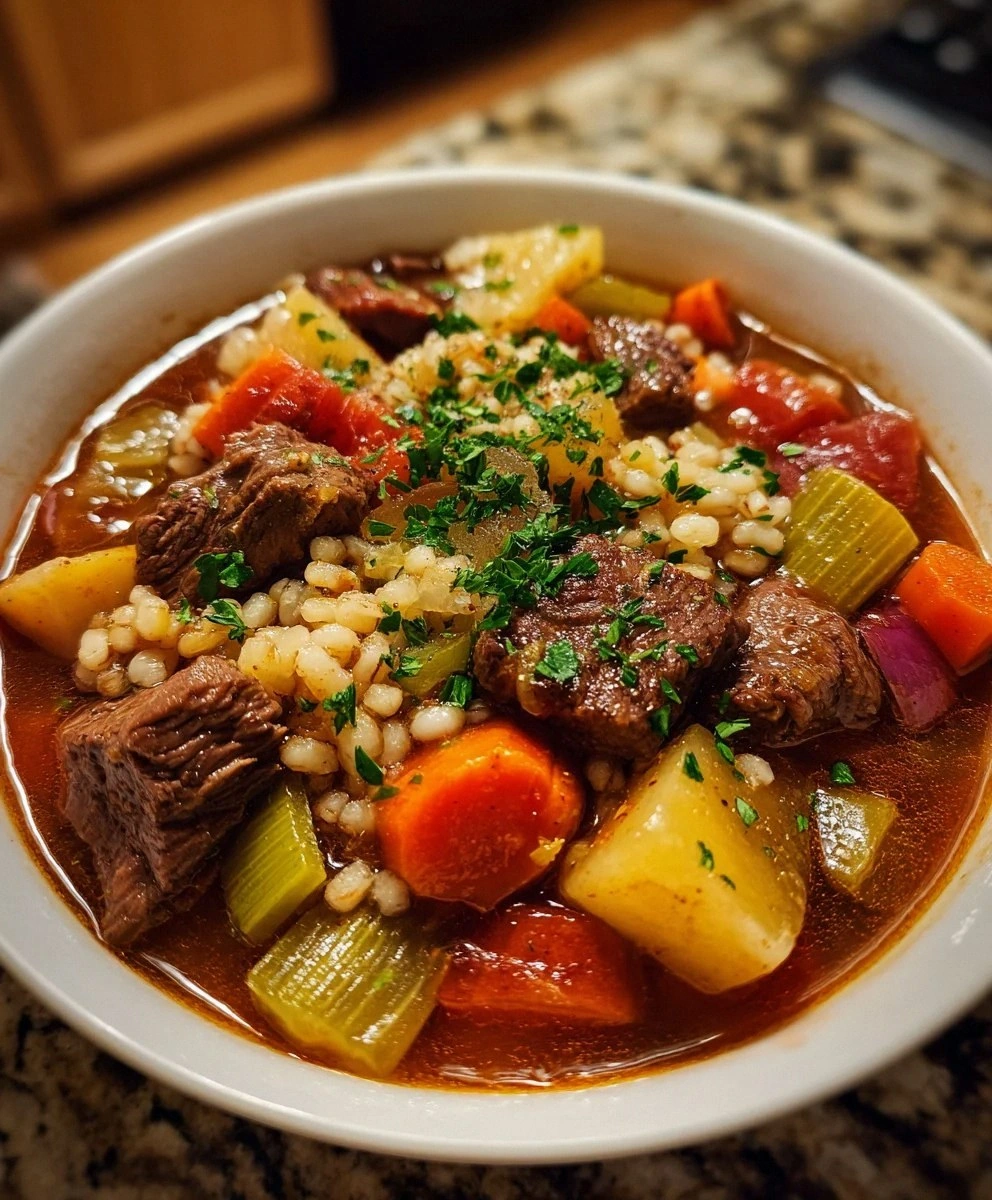
- Add the vegetables in order of cooking time: first rutabaga and carrots (they need 45 minutes), then parsnips and celery (30 minutes), finally potatoes (20 minutes). Stir gently — you don’t want to break up the beef. The stew will look like a vegetable parade. If it gets too thick, add a splash of water. You want it soupy but not watery.
- Simmer uncovered for the final 20 minutes to let the barley finish cooking and the stew thicken. Stir occasionally to prevent sticking. The barley will plump and the broth will turn glossy. Taste and season with salt and pepper — it needs more than you think. Remove bay leaves. The stew is done when the beef falls apart at the nudge of a spoon and the barley is tender with a slight chew.
That's it — you did it. But hold on, I've got a few more tricks that'll take this to another level...
Insider Tricks for Flawless Results
The Temperature Rule Nobody Follows
Most people cook stew at too high a heat, thinking it’ll finish faster. Wrong. You want the barest whisper of a simmer — around 200°F. Higher heat tightens the meat proteins, squeezing out moisture and leaving you with chewy nuggets. Use a flame tamer if your burner runs hot. The stew should murmur, not chatter. A friend once asked why her stew tasted like shoe leather — she was boiling it like pasta. Drop the heat, set a timer, and go binge Netflix. Good things come to those who wait.
Why Your Nose Knows Best
Don’t trust the clock — trust your senses. The stew is ready when your kitchen smells like you’ve walked into an Irish pub on a rainy day. The beef should yield to gentle pressure, not fight back. Taste the barley — it should be tender with a slight resistance, like al dente pasta. If it’s crunchy, keep simmering. If it’s mushy, you’ve gone too far. And here’s the secret: make it the day before. Refrigerate overnight, then reheat gently. The flavors meld into something transcendent — like the stew went to finishing school.
The 5-Minute Rest That Changes Everything
After cooking, let the stew rest off heat for 5 minutes. This lets the barley absorb any excess liquid and the flavors settle. Stir in a handful of fresh parsley right before serving — it brightens the whole dish. Skip this and you’ll have parsley that tastes like wet grass. The residual heat wilts it perfectly. And here’s a bonus: if you want extra richness, stir in a tablespoon of butter at the end. It melts into the broth and gives you restaurant-level gloss.
Creative Twists and Variations
This recipe is a playground. Here are some of my favorite ways to switch things up:
Smoky Bacon Bomb
Start by rendering 4 strips of diced bacon until crispy. Remove and sprinkle on top at the end. Use the bacon fat to brown the beef — it adds smoky depth that makes you want to build a cabin in the woods. Add a pinch of smoked paprika with the herbs. The result tastes like it cooked over a campfire.
Mushroom Forest
Add 8 ounces of cremini mushrooms, quartered, with the onions. They release earthy juices that amplify the beef flavor. Use mushroom broth instead of water for double umami. Finish with a splash of soy sauce — it’s like giving the stew a savory high-five.
Spicy Irish Wake
Add a diced jalapeño with the garlic and a pinch of cayenne. The heat cuts through the richness and makes the stout taste maltier. Serve with crusty bread to mop up tears of joy. I dare you to taste this and not go back for seconds.
Lamb Swap
Use lamb shoulder instead of beef for a more gamey, robust flavor. Add a sprig of fresh mint with the herbs — it’s traditional in Irish lamb stews and brightens the heavy flavors. The Guinness pairs beautifully with lamb’s slight gaminess.
Vegetarian Shamrock
Skip the beef and use portobello mushrooms and cooked lentils. Use vegetable broth and add a tablespoon of miso paste for depth. The barley still gives you that hearty texture. Even carnivores devour this version.
Stout Swap
Try a chocolate stout for sweeter notes or an oatmeal stout for creaminess. Each brings a different personality — chocolate stout makes it dessert-adjacent, while oatmeal stout adds silky body. Just avoid anything hoppy — IPAs turn bitter and weird.
Storing and Bringing It Back to Life
Fridge Storage
Cool completely before storing — hot stew in the fridge raises the temperature and invites bacteria to party. Use shallow containers so it chills fast. It keeps 4 days tightly covered. The barley continues to absorb liquid, so add a splash of broth when reheating. Don’t microwave on high — it explodes and creates beef lava. Use medium power and stir often.
Freezer Friendly
Freeze in portion-sized containers or zip bags laid flat for easy stacking. Leave 1 inch of headspace — liquids expand. It keeps 3 months. Thaw overnight in the fridge, never on the counter. The potatoes can get grainy, but the flavor stays stellar. Pro move: freeze without potatoes and add fresh ones when reheating.
Best Reheating Method
Gentle is key. Use a saucepan over medium-low, adding broth until it’s soupy again. Cover and heat slowly, stirring occasionally. If you’re in a rush, microwave at 70% power with a loose lid. Add a tiny splash of water before reheating — it steams back to perfection. Taste and adjust seasoning — it often needs more salt after freezing.