I still remember the sweltering July afternoon when my air-conditioning gave up the ghost and the thermometer on the porch laughed its way past ninety-five. I had a carton of cherries so cold they sweated, a paper bag of peaches that perfumed the whole kitchen like a southern postcard, and absolutely no desire to turn on the stove. My best friend—who swears she “doesn’t cook”—dared me to “make something unforgettable without boiling water.” Challenge accepted. What happened next was pure summer sorcery: a peach-cherry salsa so bright, so juicy, so ridiculously refreshing that we stood over the bowl eating it straight with tortilla-chip shovels until the bowl was embarrassing bare.
This salsa is the edible equivalent of cannon-balling into a mountain lake. One bite and the peach nectar runs down your chin like sunshine turned liquid, while the cherries pop like tiny wine balloons against your teeth. The jalapeño sneaks up like a summer thunderstorm—warm, quick, gone—leaving just enough spark to make you reach for another scoop. You’ll smell lime zest before you ever see it, and the cilantro drifts in like a cool breeze that refuses to leave. If you close your eyes you can practically hear the lawn mowers hum and the ice-cream truck jingle in the distance.
Most fruit salsas lean too syrupy, too safe, too “I just dumped a can of pineapple in pico de gallo.” This version flips the script by treating fruit like what it really is—produce that deserves the same respect as any tomato. The trick is a lightning-fast maceration in lime and a whisper of salt that pulls the juices into a glossy, naturally sweet dressing. No added sugar, no gloopy preserves, no sad canned fruit swimming in heavy syrup. The result tastes like someone gave regular salsa a beach vacation and it came back tan, rested, and ready to party.
Let me walk you through every single step—by the end, you’ll wonder how you ever settled for store-bought pico when summer is literally begging to be spooned onto a chip.
What Makes This Version Stand Out
Lightning-Fast: The only thing you heat up is your knife hand—everything else happens at countertop speed. Ten minutes of chopping, five minutes of resting, done. You could start a batch during a commercial break and be back on the couch before the show returns.
Texture Tug-of-War: Silky peach cubes, snappy cherry halves, and crunchy onion all wrestle for your attention, so every bite feels like a tiny fireworks finale. No one-note mush here.
Sweet-Heat Harmony: Most fruit salsas taste like dessert wearing a sombrero. This one keeps the sugar in check and lets the jalapeño’s vegetal heat carve out a perfect balance. You’ll taste sweet, then spice, then the chorus of lime that makes the whole thing sing.
Color-Pop Wow: Sunset orange, ruby red, and specks of emerald green mean you could serve this in a paper cup and still steal the show. Bring it to a potluck and watch people Instagram before they taste.
Make-Ahead Magic: It actually improves after a half-hour nap in the fridge, so you can prep early and look like a culinary wizard when guests arrive. I dare you to taste this and not go back for seconds.
Ingredient Flexibility: Swap nectarines for peaches, add blueberries, lose the cilantro if you’re genetically anti—this recipe rolls with the punches and still lands on its delicious feet.
Crowd Confessions: I’ve served this to toddlers who hate vegetables, steak-and-potato dads, and self-proclaimed spice wimps. Every single one asked for the recipe before the bowl was empty.
Inside the Ingredient List
The Flavor Base
Garlic might sound like the odd cousin at this fruit family reunion, but trust me—one small clove, micro-minced into a paste, melts into the juices and gives the whole salsa a savory backbone. Skip it and everything tastes like a candle. Fresh garlic is non-negotiable; the jarred stuff carries a tinny bitterness that will haunt the bowl like a culinary poltergeist.
Lime is the bandleader here. You need both zest and juice—the zest carries the floral citrus oils that read as “summer breeze,” while the juice provides the sharp snap that keeps the fruit from cloying. Roll the lime under your palm before cutting; you’ll nearly double the juice yield and your forearms get a mini workout. Bottled lime juice tastes like a chemistry set, so please don’t break my heart by going that route.
The Texture Crew
Peaches should smell like you buried your face in a blossom. If the fuzz doesn’t give slightly under gentle thumb pressure, walk away and let them ripen on the counter in a paper bag for a day. Underripe peaches taste like crunchy cotton, while overripe ones dissolve into baby food. Look for a deep, sunset-colored blush that creeps all the way to the stem; that’s sugar concentrating and promising sweet, syrupy bliss.
Cherries love to play hide-and-seek with their pits, so invest in an olive pitter or a sturdy straw. Halve them so each cherry becomes a tiny edible bowl that captures juices like a ruby cup. If you can only find sour cherries, no worries—just add a whisper more salt and let the salsa rest an extra five minutes to mellow.
The Unexpected Star
Red onion brings crunch and a purple confetti vibe, but raw onion can bully the fruit. The fix is a thirty-second rinse under cold water, which washes away the sulfury bite while keeping the crisp snap. Slice paper-thin so the onion practically dissolves on your tongue instead of crunching like a rock in your sandal.
The Final Flourish
Cilantro is the herb people love to hate. If you’re in the soap-gene camp, swap in flat-leaf parsley or even thin-sliced basil for a sweeter perfume. Either way, chop at the very last second; herbs start oxidizing the moment you cut them and that emerald brightness is half the visual charm.
Spice Dial
Jalapeño heat lives in the white ribs and seeds. Want a gentle summer flutter? Remove every last seed. Craving a beach bonfire vibe? Leave one strip of membrane and you’ll get a slow, friendly burn that blooms after you swallow. Wear gloves or you’ll rub your eye later and cry for reasons unrelated to rom-coms.
Everything's prepped? Good. Let's get into the real action...
The Method — Step by Step
- Start with a frozen bowl—yes, seriously. Ten minutes in the freezer gives you a frosty vessel that keeps the fruit from going limp while you work. Dump the diced peaches and halved cherries straight in and let them chill out like VIPs in a snow lounge.
- Micro-plane your garlic into a paste. Hold the clove with the flat side of a chef’s knife, smash once, peel, then grate it on the fine side of a box grater. You want a fluffy mound that disappears into the juices, not chunky bits that scream “I just ate a clove.” Slide the paste into the bowl but don’t stir yet—let it sit on top so the lime can tame the raw bite in the next step.
- Zest the lime directly over the bowl so those aromatic oils mist down like citrus confetti. Cut the lime in half and juice it through your fingers to catch seeds; you should get about two tablespoons of tart sunshine. Pour the juice over the garlic and watch it fizz slightly—that’s the acid neutralizing the harshest edges of the allium. Give a gentle stir just to moisten everything.
- Now the salt—just a pinch, barely half a teaspoon. Sprinkle from high above so it snows evenly. Salt acts like a tiny extractor, pulling juices from the fruit and turning them into a glossy natural syrup. Wait thirty seconds and you’ll see a shimmer start to form at the bottom of the bowl. That’s liquid gold, and you want every drop clinging to your chips later.
- Time for the onion rinse. Slice your red onion pole-to-pole so you get crescent moons that separate into feathery strands. Dump them into a fine mesh strainer and run cold water over for thirty seconds, tossing with your fingers. Shake dry, then introduce the onions to the party. They’ll soften slightly in the acid but keep their snap.
- Jalapeño time—channel your inner surgeon. Slice off the stem end, stand the pepper upright, and run your knife south-to-north cutting away the white ribs. For mild, scrape every last seed out with a spoon. For medium, leave a tiny hinge of membrane. Mince into confetti so tiny you could sprinkle it like glitter. Add to the bowl and know that the heat will bloom as it sits, so err on the side of less now; you can always stir in more later.
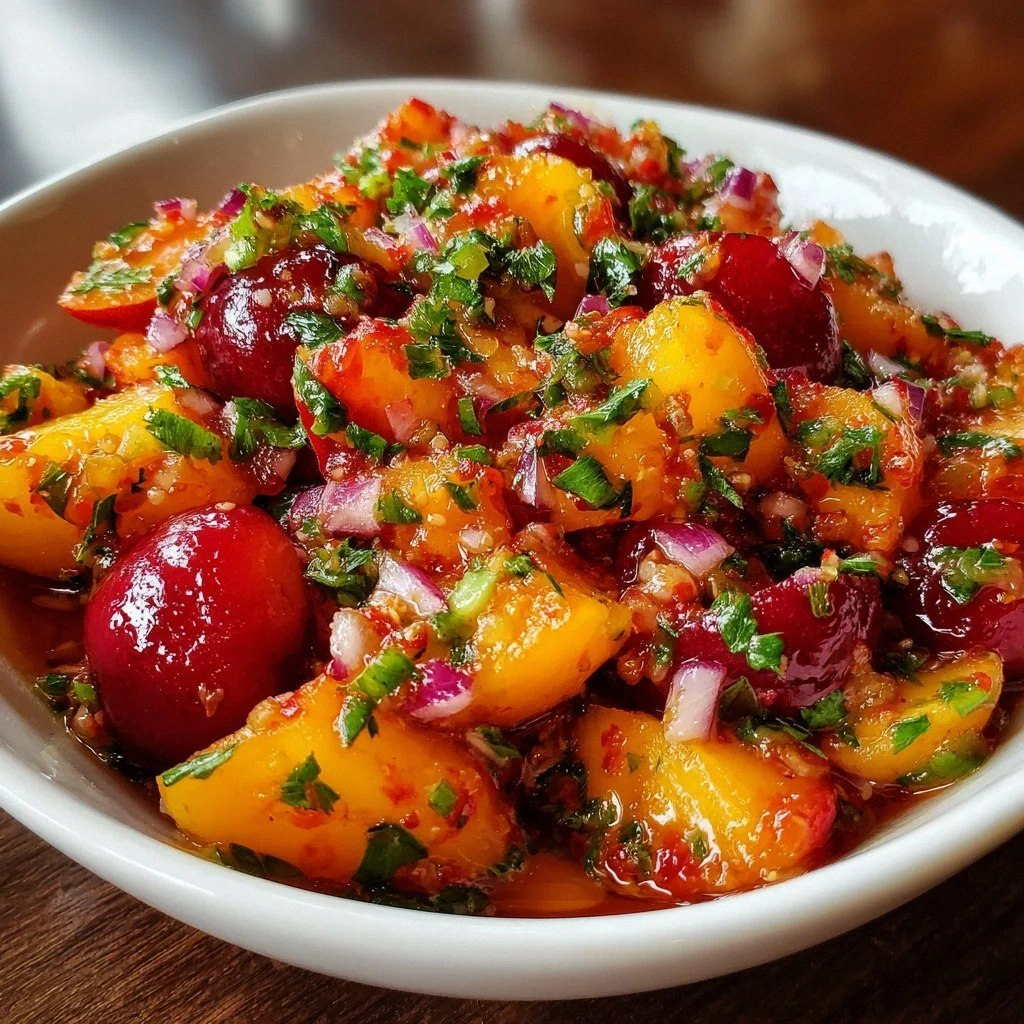
- Gently fold everything with a spatula, scraping the bottom so every cube gets glossy. Resist the urge to mash; you want distinct cubes that tumble like edible jewels. The peaches will give just enough juice to coat the cherries, and the colors will start to look like a desert sunset in a bowl.
- Let the salsa nap—covered, on the counter—for fifteen minutes. This is where the magic happens: the salt dissolves, the lime permeates, and the garlic mellows into a background hum. Your kitchen will smell like a beachside fruit stand run by a salsa band. Picture yourself pulling this out of the refrigerator, the whole kitchen smelling incredible, condensation beading on the bowl like summer sweat.
- Just before serving, chop your cilantro (or parsley/basil) and scatter it on top. Stir once so the flecks stay vivid. Serve in a wide shallow bowl so people can see the mosaic, with a mountain of tortilla chips alongside. Stand back and watch the stampede. That first scoop? Absolute perfection.
That's it—you did it. But hold on, I've got a few more tricks that'll take this to another level...
Insider Tricks for Flawless Results
The Temperature Rule Nobody Follows
Room-temp fruit tastes sweeter because cold dulls your taste buds. Let the salsa sit out fifteen minutes before serving and you’ll swear someone sneaked in and added honey. Conversely, if you over-salted, a ten-minute chill in the fridge will calm the perception of saltiness without diluting flavor. Temperature is a secret seasoning most cooks ignore.
Why Your Nose Knows Best
If the assembled salsa smells primarily like lime, you need more fruit. If you smell only garlic, add another squeeze of citrus. A balanced salsa should smell like a summer garden after a warm rain: fruity, herbal, with the faintest whisper of earth. Trust your schnoz; it’s been honing this skill since cave-people days.
The Five-Minute Rest That Changes Everything
After you stir in cilantro, wait five minutes before tasting. The volatile oils need time to mingle, and the color will turn from army green to jade. A friend tried skipping this step once—let’s just say the salsa tasted like lawn clippings and regret.
Creative Twists and Variations
This recipe is a playground. Here are some of my favorite ways to switch things up:
Smoky Peach-Cherry Salsa
Swap the jalapeño for half a chipotle pepper in adobo, minced into smoky velvet. The sweet fruit loves the campfire flavor; serve alongside grilled pork chops and prepare for applause.
Coconut-Crusted Shrimp Topping
Add half a cup of tiny-diced mango and a tablespoon of toasted coconut flakes. Spoon over coconut-crusted shrimp and you’ve got a tropical vacation on a plate.
Breakfast Hero
Stir in half a cup of diced avocado right before serving and pile onto buttered toast with a fried egg. The yolk mingles with the fruit juices and creates a sauce you’ll want to bottle.
Stone-Fruit Swap
Plums, nectarines, or apricots all work—just keep the total weight the same. Each brings a different perfume; plums add a wine-like depth, while apricots give a faint almond note from their kernels.
No-Heat Version for Kids
Replace the jalapeño with a few strips of finely diced cucumber. You’ll get crunch without the fire, and tiny humans will think you’re a wizard for making fruit taste like candy.
Red Wine Sangria Salsa
Swap lime juice for a tablespoon of dry red wine and add a handful of halved red grapes. Serve with cinnamon-dusted pita chips and watch adults revert to childhood excitement.
Storing and Bringing It Back to Life
Fridge Storage
Transfer to an airtight glass jar, press a piece of plastic wrap directly onto the surface to prevent browning, and refrigerate up to three days. The flavors intensify overnight, so day-two salsa is actually a bonus round. After day three the cilantro fades and the fruit softens—still edible, just not as dazzling.
Freezer Friendly
Freeze in silicone ice-cube trays; each cube is about two tablespoons of salsa. Pop a cube into sparkling water for instant summer sangria, or thaw three cubes for a quick taco night. Frozen salsa keeps two months without losing its sunny personality.
Best Reheating Method
There is none—this is a cold celebration. If your fridge runs extra-cold and the salsa tightens up, let it sit on the counter ten minutes or add a tiny splash of water and gently fold. You want that glossy coat back, not a syrupy puddle.