I was in the middle of a chaotic Tuesday night, the kind where the dishwasher is humming, the kids are demanding bedtime snacks, and a rogue blender decides to launch a smoothie at the ceiling. In that moment of culinary pandemonium, a friend dared me to turn my leftover strawberries and a jar of chia seeds into something that could actually impress a grown‑up palate. I stared at the bright red fruit, imagined the classic strawberry shortcake we all adore, and thought, “What if I could give that nostalgic dessert a protein‑packed, dairy‑free makeover?” The idea sparked faster than a match in a wind tunnel, and before I knew it, I was whisking coconut milk and almond milk together like a mad scientist.
The kitchen filled with a sweet, buttery aroma that reminded me of a summer fair, the kind where the air feels like a warm hug and every bite feels like sunshine. I could hear the faint crackle of the chia seeds as they soaked, a tiny pop that sounded like applause for the experiment. My fingertips tingled from the cool coconut milk, and the fresh strawberries glistened like tiny rubies waiting to be devoured. The texture of the macadamia nuts, when blended, turned into a buttery crumble that reminded me of shortcake biscuits, only healthier and more satisfying.
Most strawberry shortcake recipes either drown you in sugar or rely on heavy cream that leaves you feeling guilty after the last spoonful. This version, however, flips the script: it’s creamy, it’s crunchy, it’s protein‑rich, and it delivers that classic shortcake flavor without the calorie avalanche. I tossed in Vital Proteins Collagen Peptides because I’m a firm believer that a little extra bounce in the joints never hurts, and the subtle vanilla undertone from the almond milk ties everything together like a secret handshake. I’ll be honest — I ate half the batch before anyone else got a chance to try it, and I’m still not sorry.
Let me walk you through every single step — by the end, you’ll wonder how you ever made it any other way. Okay, ready for the game‑changer? This next part? Pure magic. I dare you to taste this and not go back for seconds.
What Makes This Version Stand Out
- Texture: The chia seeds create a pudding that’s as smooth as silk yet has a subtle bite, while the macadamia nut crumble adds a buttery crunch that mimics shortcake crumbs.
- Flavor Fusion: Coconut milk brings tropical richness, almond milk adds vanilla depth, and fresh strawberries provide that bright, tangy pop you love.
- Protein Power: Collagen peptides and the natural protein in nuts turn this dessert into a post‑workout treat without sacrificing indulgence.
- Simplicity: No baking, no frosting, just a handful of steps and a fridge‑time wait — perfect for busy lives.
- Health Halo: No refined sugar, no dairy, no gluten. It’s a clean‑eating masterpiece that still feels like a cheat.
- Make‑Ahead Magic: The pudding sets overnight, so you can prep it the night before and wake up to a ready‑to‑serve breakfast or dessert.
- Crowd Reaction: Guests often ask, “Is this really healthy?” and then dive in, forgetting the question entirely.
- Ingredient Quality: Using premium coconut milk and raw macadamia nuts elevates the dish from ordinary to extraordinary.
Inside the Ingredient List
The Flavor Base
The duo of coconut milk and unsweetened vanilla almond milk forms the liquid canvas. Coconut milk contributes a creamy, slightly sweet undertone that mimics the richness of traditional shortcake biscuits, while the almond milk adds a subtle vanilla note that balances the tropical flavor. Skipping the coconut milk would leave the pudding flat and watery, and using sweetened almond milk would tip the sugar scale into dessert overload. If you’re allergic to nuts, swap almond milk for oat milk; the texture stays silky, and the flavor remains mellow.
The Texture Crew
Chia seeds are the unsung heroes here. When they absorb the milk, they swell into gelatinous pearls that give the pudding its signature pudding‑like body. Missing chia means you lose that delightful bite and end up with a runny sauce. Macadamia nuts provide a buttery crumble that mirrors shortcake crumbs; their high fat content keeps the dish satisfying. If macadamias are pricey, substitute with toasted almonds or hazelnuts for a slightly different but still luxurious crunch.
The Unexpected Star
Vital Proteins Collagen Peptides may sound like a fitness supplement, but in this recipe they act as a silent structural enhancer. They dissolve completely, adding a subtle umami depth while boosting protein without changing texture. Omit the collagen and you’ll still have a tasty pudding, but you’ll miss out on the extra skin‑loving benefits. For vegans, a scoop of unflavored pea protein works as a decent alternative, though the mouthfeel will be a touch grainier.
The Final Flourish
Fresh strawberries are the bright, acidic counterpoint that cuts through the richness. Their natural sugars are enough to sweeten the dish without added sugar. If strawberries are out of season, frozen berries (thawed and drained) work just as well. Unsweetened shredded coconut adds a hint of tropical texture on top, echoing the coconut milk below. A pinch of fine sea salt amplifies every flavor, acting like a conductor in an orchestra; without it, the dish can taste flat.
Everything's prepped? Good. Let's get into the real action…
The Method — Step by Step
Gather all your liquids in a large mixing bowl: 1 cup coconut milk and 1 cup unsweetened vanilla almond milk. I like to pour them in slowly while whisking, creating a frothy base that feels like a cloud waiting to be transformed. The moment the two milks meet, you’ll notice a faint sweet aroma that hints at the tropical vibe to come. Let the mixture sit for a minute so the temperature evens out, which helps the chia seeds hydrate evenly later on.
Kitchen Hack: Warm the coconut milk slightly (no more than 40°C/104°F) before mixing; warm liquid accelerates chia gelatinization, cutting set time by a few minutes.Add the ½ cup chia seeds to the milk mixture. Sprinkle them evenly, then whisk vigorously for about 30 seconds. You’ll hear a soft, almost musical clatter as the seeds start to disperse. Pause, let the mixture sit for 2 minutes, then whisk again to break up any emerging clumps. This two‑stage whisk is the secret to a smooth pudding that doesn’t have any stubborn pockets of dry seed.
Stir in the 1 scoop Vital Proteins Collagen Peptides. The powder dissolves like a whisper, leaving no grainy residue. At this point, the mixture should look slightly thicker, but it’s still pourable. Give it a quick taste; you’ll notice a faint, almost buttery undertone that will later meld perfectly with the strawberries.
Fold in the ½ cup unsweetened shredded coconut and a pinch of fine sea salt. The coconut adds a subtle texture that will surface as tiny flecks, while the salt acts as a flavor amplifier. You’ll feel the mixture become a little more cohesive, like a secret society of ingredients finally meeting.
Watch Out: If you add the salt before the coconut, the coconut can absorb the salt and become overly salty. Always add salt after the coconut is mixed in.Cover the bowl with plastic wrap and refrigerate for at least 30 minutes, preferably 2‑3 hours. During this time, the chia seeds will swell, turning the liquid into a thick, pudding‑like consistency. While you wait, the strawberries can be prepped: hull them, slice them, and set aside a handful for garnish later. The kitchen will start to smell like a tropical bakery, and you’ll be tempted to sneak a spoonful — I won’t judge.
While the pudding sets, toast the 1 cup macadamia nuts in a dry skillet over medium heat. You’ll hear a gentle sizzle as the nuts release their natural oils, and the scent will turn buttery and nutty, reminiscent of fresh‑baked shortcake. Stir constantly to avoid burning; the nuts should turn a light golden brown in about 4‑5 minutes. Once toasted, let them cool, then roughly chop them with a chef’s knife.
Kitchen Hack: If you want extra crunch, toss the chopped macadamias with a teaspoon of coconut oil before toasting; they’ll crisp up like a miniature shortcake crumble.Remove the pudding from the fridge and give it a good stir. It should have a thick, spoon‑able consistency, similar to a custard that holds its shape but still yields to a gentle press. If it looks too thick, whisk in a splash of almond milk; if too runny, let it sit another 10 minutes. This is the moment of truth — the pudding should feel like a luxurious, velvety blanket for the strawberries.
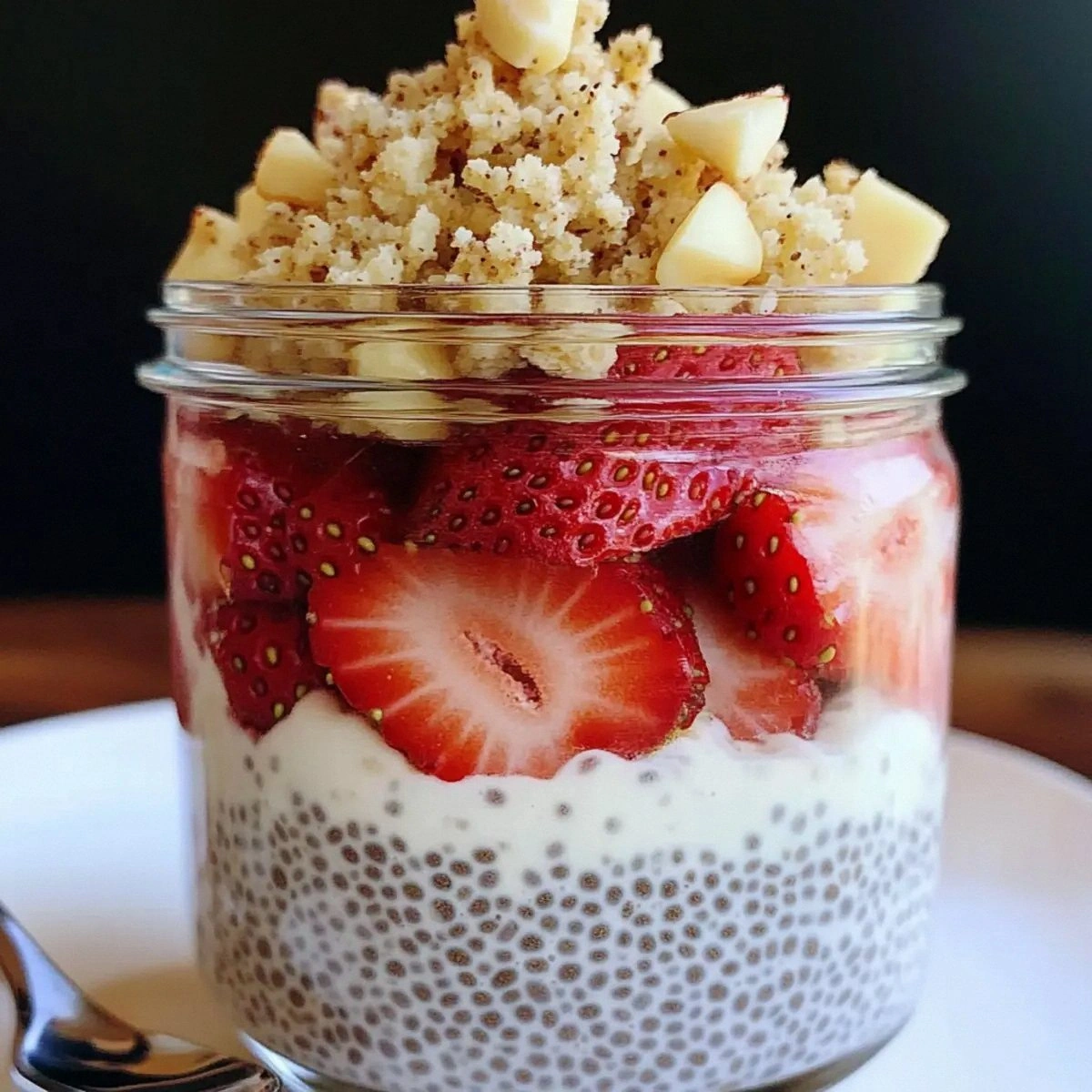
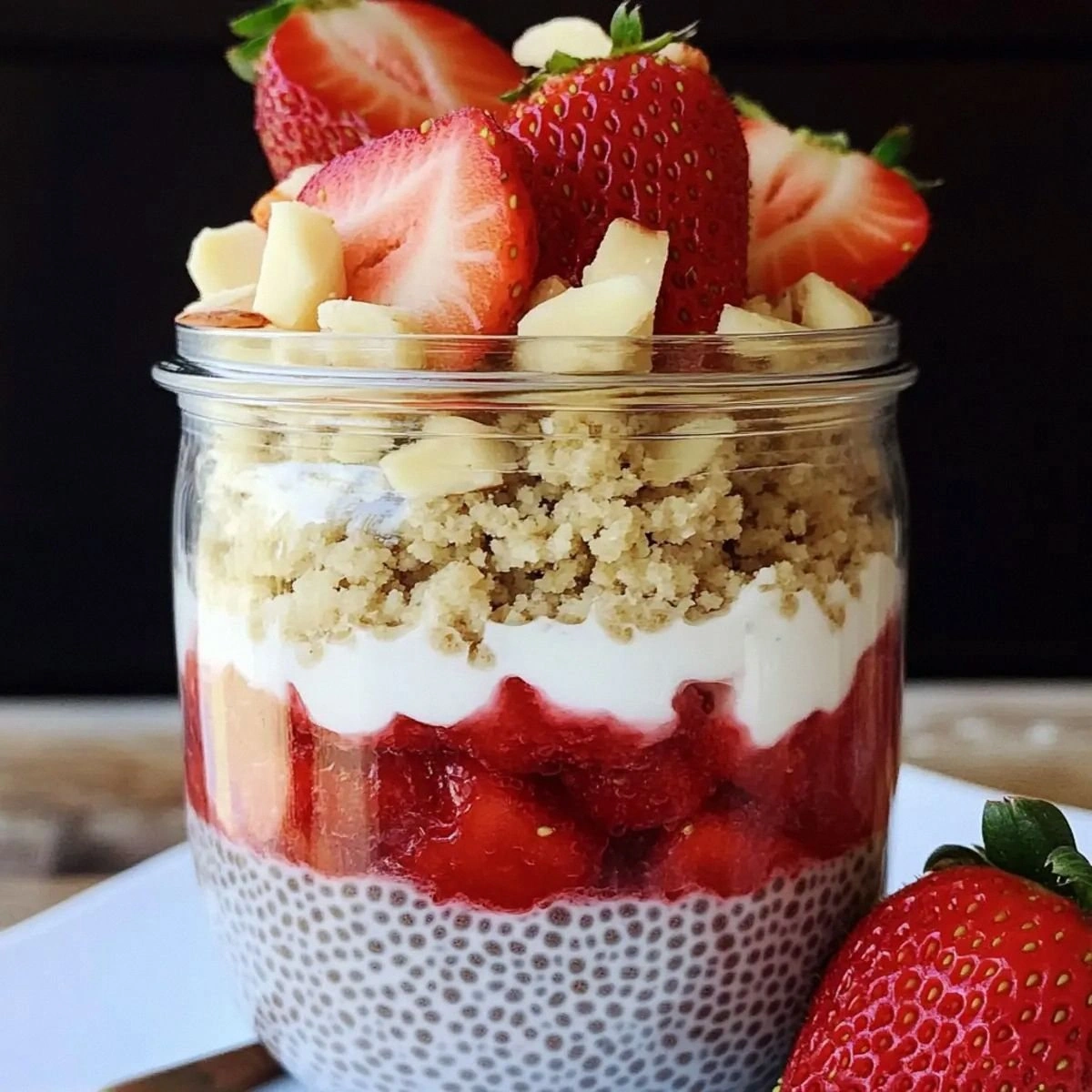
To assemble, spoon a generous layer of chia pudding into serving glasses or bowls. Top with a mound of fresh strawberry slices, sprinkle the toasted macadamia crumble, and finish with a dusting of shredded coconut. The visual should be a layered masterpiece: creamy base, ruby‑red fruit, golden nut crumble, and a final coconut snow‑cap. Serve immediately, or keep refrigerated for up to 24 hours; the flavors only get better with time.
That's it — you did it. But hold on, I've got a few more tricks that'll take this to another level…
Insider Tricks for Flawless Results
The Temperature Rule Nobody Follows
Never add cold chia seeds straight from the fridge to room‑temperature milk. The temperature shock can cause uneven swelling, leading to pockets of dry seeds. Warm the milk just a touch (no more than 40°C/104°F) before mixing; this tiny heat boost speeds up gelatinization and ensures a uniformly thick pudding. I once tried the cold‑first method and ended up with a lumpy mess — lesson learned.
Why Your Nose Knows Best
When the toasted macadamias start to emit a buttery, toasted fragrance, that’s your cue to remove them from heat. The aroma is a reliable indicator that the nuts have reached perfect crunch without burning. Trust your nose more than a timer; ovens and stovetops can vary, but your sense of smell is always spot‑on.
The 5‑Minute Rest That Changes Everything
After whisking the chia and milk, let the mixture rest for exactly five minutes before the second whisk. This micro‑pause allows the seeds to begin absorbing liquid, so the second whisk simply smooths out any clumps rather than fighting against dry seeds. The result is a pudding that’s silkier and more homogeneous. I used to skip this step and ended up with a grainy texture that ruined the whole experience.
Layering Like a Pro
When assembling, start with a thin layer of pudding, then strawberries, then more pudding, and finish with nuts. This sandwich technique prevents the fruit from sinking and ensures every bite has a balanced mix of creaminess and fruit. If you dump all the pudding first, the strawberries will sit at the bottom and become soggy.
The Secret Sweetener Swap
If you crave a touch more sweetness without adding refined sugar, blend a tablespoon of ripe banana into the milk before adding chia. The banana’s natural sugars integrate seamlessly, and its creamy texture adds an extra layer of richness. Just remember that banana will introduce a slight flavor shift, so use it sparingly if you want the pure strawberry‑shortcake profile.
Creative Twists and Variations
This recipe is a playground. Here are some of my favorite ways to switch things up:
Chocolate Dream
Add 2 tablespoons of unsweetened cocoa powder to the milk before whisking the chia. The result is a chocolate‑strawberry fusion that feels like a decadent dessert bar. Top with shaved dark chocolate for extra flair.
Citrus Burst
Replace half of the strawberries with orange segments and a teaspoon of zest. The citrus brightens the pudding, giving it a summer‑day vibe that’s perfect for brunch.
Tropical Island
Swap macadamia nuts for toasted coconut flakes and add a splash of pineapple juice to the milk. This creates a pineapple‑coconut shortcake vibe that transports you to a beachside café.
Nut‑Free Delight
If you have nut allergies, replace macadamias with toasted pumpkin seeds and use oat milk instead of almond milk. The pumpkin seeds give a pleasant earthy crunch while keeping the dish completely nut‑free.
Spiced Autumn
Add a pinch of ground cinnamon and a dash of nutmeg to the milk mixture. This warm spice combo turns the pudding into a cozy, fall‑ready treat, especially when paired with a drizzle of maple syrup.
Storing and Bringing It Back to Life
Fridge Storage
Transfer any leftover pudding to an airtight glass container. It will keep fresh for up to 5 days. Before serving, give it a quick stir to re‑incorporate any settled chia. If the texture feels too thick after a few days, whisk in a splash of almond or coconut milk.
Freezer Friendly
Yes, you can freeze this pudding! Portion it into single‑serve containers, leaving a little headroom for expansion. Freeze for up to 2 months. To thaw, move the container to the fridge overnight, then stir in a teaspoon of milk to revive the creamy texture.
Best Reheating Method
When you want a warm version (think breakfast comfort), microwave a single serving for 30‑45 seconds, then stir in a tiny splash of water or milk. The added moisture steams the chia back to a luscious consistency, turning a cold pudding into a warm, comforting bowl.