I was standing in my kitchen, staring at the burnt toast, when I realized I had a craving that no burnt breakfast could satisfy. The air smelled of scorched sugar, and my eyes were glued to the stove where the pot of water was already boiling over. I knew I needed something savory, something that would make my taste buds dance and my stomach sing. That moment was the spark that lit a culinary fire, a fire that would soon blaze into what I now call “Ramen Carbonara Magic.”
The craving hit me like a wave of umami: silky noodles, smoky bacon, a kick of heat, and the luxurious hug of Parmesan. I pictured a bowl that would feel like a warm hug on a rainy day, the kind of comfort food that makes you forget the world outside the kitchen. My mind was already swirling with possibilities—how could I merge the quickness of ramen with the decadence of a classic carbonara? The idea was simple, but the execution would be anything but.
I remember the first time I tried the fusion: I tossed the noodles into a pan with bacon and a splash of gochujang, then whisked eggs and cheese into a silky sauce that clung to every strand. The result was a dish that felt like a secret party in my mouth, with each bite delivering a burst of heat, a whisper of cheese, and a crunch of bacon that shattered like thin ice. I ate half the batch before anyone else even had a chance to taste it.
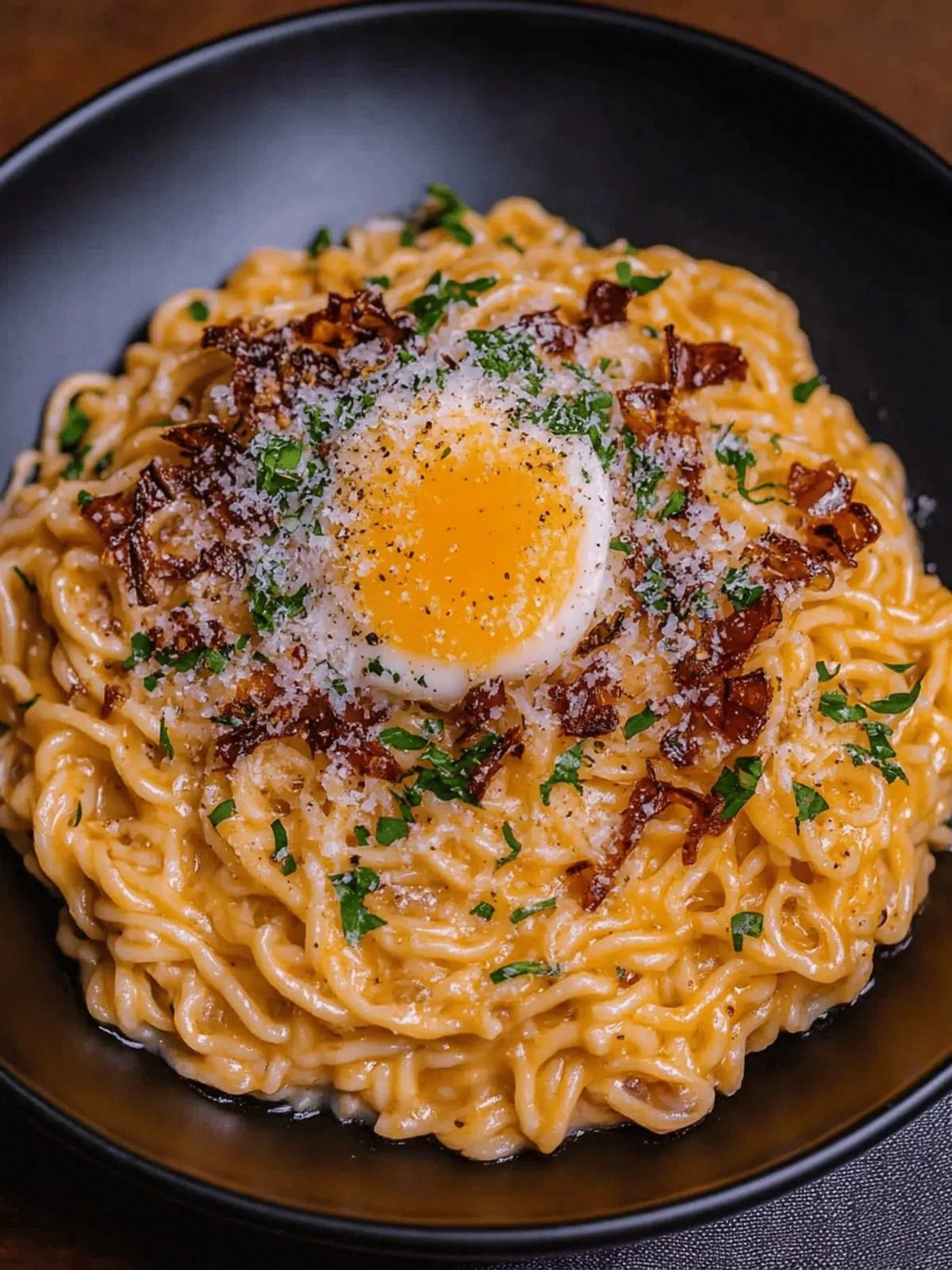
The texture is a marvel—soft noodles coated in a velvet‑like sauce that glistens with a golden sheen, the bacon crisp at the edges yet tender inside, and a sprinkle of fresh herbs that adds a bright, almost citrusy finish. The aroma is intoxicating, a blend of smoky bacon, sharp Parmesan, and a subtle heat that lingers on the tongue. When you take a bite, the sauce coats the pasta like a silky blanket, the heat from the gochujang dances across your palate, and the fresh herbs lift the whole dish into something that feels both familiar and daringly new.
What sets this version apart is that it’s a single‑pan, no‑fuss, 20‑minute wonder that delivers the richness of a traditional carbonara without the fuss of eggs on the stove. The noodles are never soggy because they’re cooked to al dente and then immediately tossed in the sauce, which thickens without scrambling the eggs. The bacon is crisped to a perfect crunch, and the gochujang adds a depth of flavor that you’d normally expect from a slow‑cooked sauce.
And here’s the teaser: I’ll show you a trick that turns ordinary ramen into a silky, creamy masterpiece in seconds—no heavy cream, no fancy sauce, just a whisk, a splash of water, and a touch of Parmesan. The secret lies in the timing and the way the eggs are incorporated. Trust me, this is hands down the best version you’ll ever make at home.
Okay, ready for the game‑changer? This next part? Pure magic. Stay with me here—this is worth it. Let me walk you through every single step—by the end, you’ll wonder how you ever made it any other way.
What Makes This Version Stand Out
- Flavor: The blend of smoky bacon, sharp Parmesan, and a spicy kick from gochujang creates a layered taste that’s both comforting and adventurous. Each bite feels like a mini celebration of umami.
- Texture: The noodles remain al dente, coated in a silky sauce that clings without turning soggy. The bacon offers a satisfying crunch that contrasts the creamy coating.
- Speed: You can have a full‑blown dinner in 20 minutes. No pre‑cooking, no separate sauce station—everything happens in one pan.
- Ingredient Quality: Fresh herbs, real Parmesan, and thick-cut bacon elevate the dish beyond the standard instant ramen experience.
- Versatility: It works for a quick weeknight, a crowd‑pleasing appetizer, or a comforting solo meal. The recipe scales easily for any number of servings.
- Make‑Ahead Potential: The sauce can be prepared in advance and re‑heated with a splash of water to keep it silky. This makes it a perfect meal prep option.
- Audience: Most people love ramen, most love carbonara, and this recipe merges those two worlds into one irresistible bowl.
- Presentation: The vibrant green herbs and golden crusted bacon make the dish look as good as it tastes—ideal for Instagram or a dinner party.
Alright, let's break down exactly what goes into this masterpiece…
Inside the Ingredient List
The Flavor Base
The ramen noodles are the canvas that holds everything together. They bring a chewy, comforting texture that pairs beautifully with the sauce. If you skip the noodles, you lose the hearty foundation that makes this dish a filling meal. For best results, choose a brand that has a bit more protein, as that will hold up better against the sauce.
The Texture Crew
The bacon slices add a smoky crunch that breaks up the silky sauce. The eggs provide the creamy backbone, while the Parmesan cheese thickens the mixture into a luscious coating. If you skip the bacon, the dish becomes too soft; if you skip the eggs, you lose the silkiness. For a healthier twist, use turkey bacon, but the flavor profile will shift slightly.
The Unexpected Star
Gochujang or hot sauce is the secret weapon that elevates this dish from simple to unforgettable. Its fermented, spicy depth adds a bold punch that balances the richness of the cheese and bacon. If you’re not a fan of heat, start with a tablespoon of mild hot sauce and adjust to taste. A splash of soy sauce can also deepen the umami profile.
The Final Flourish
Fresh herbs—parsley or green onions—provide a bright, herbal note that cuts through the richness. They also add a pop of color that makes the dish visually appealing. If you’re out of herbs, a squeeze of lemon can offer a similar brightness. Remember, the herbs are added at the end to preserve their delicate flavor.
Everything's prepped? Good. Let's get into the real action…
The Method — Step by Step
- Step 1: Bring a large pot of salted water to a rolling boil. Add the ramen noodles and cook for exactly 3 minutes, or until they’re just shy of al dente. The noodles should still hold a slight bite. Drain immediately and set aside, tossing them with a splash of oil to prevent sticking.
- Step 2: While the noodles are cooking, heat a large skillet over medium heat. Add the bacon slices, cooking until they’re golden and crispy, about 4–5 minutes per side. Flip them once, and keep an eye on the edges—they should crackle but not burn. Once done, remove the bacon, crumble it into bite‑size pieces, and set aside. The bacon fat will be the base for the sauce.
- Step 3: Return the skillet to low heat and pour in the gochujang or hot sauce. Stir continuously for 30 seconds until the sauce thickens slightly and the aroma of chili hits your nose. This step is crucial; if you rush it, the sauce will be thin and watery.
- Step 4: In a medium bowl, whisk together the eggs, Parmesan cheese, and a splash of water or milk. The mixture should be smooth and slightly frothy. The water helps keep the sauce silky and prevents the eggs from scrambling.
- Step 5: Add the drained noodles to the skillet, tossing them gently to coat with the sauce. The noodles should start to sizzle softly, releasing their starches into the sauce, which thickens into a glossy coat.
- Step 6: Watch Out: This is the moment of truth. Pour the egg mixture over the noodles, then immediately stir vigorously with tongs or a wooden spoon. The heat of the noodles will cook the eggs into a silky custard rather than scrambled eggs. If you let the mixture sit for even a second, the eggs will set into clumps.
- Step 7: Fold in the crumbled bacon and fresh herbs, stirring until everything is evenly distributed. The bacon will add a smoky crunch, while the herbs will give a fresh lift.
- Step 8: Plate the noodles immediately, ensuring the sauce is glossy and the bacon is crisp. Garnish with an extra sprinkle of Parmesan and a few fresh herb leaves for color.
- Step 9: If you want a deeper umami flavor, drizzle a teaspoon of soy sauce over the top just before serving. This will also add a subtle saltiness that balances the richness.
- Step 10: Serve hot and enjoy the symphony of textures and flavors. Remember, this dish is best eaten immediately; the sauce can thicken if left to sit.
That’s it— you did it. But hold on, I've got a few more tricks that'll take this to another level...
Insider Tricks for Flawless Results
The Temperature Rule Nobody Follows
The key to silky sauce is keeping the heat low after you add the egg mixture. If the skillet is too hot, the eggs will scramble into clumps. I always test the temperature by dropping a small amount of the sauce into a glass; if it sizzles, lower the heat. This simple check saves the dish from becoming a scrambled mess.
Why Your Nose Knows Best
Smell is your first indicator of flavor balance. When the sauce starts to thicken, it should emit a warm, toasty aroma. If you smell a sharp, raw egg scent, the heat is too high. Trust your nose, and adjust accordingly.
The 5-Minute Rest That Changes Everything
Let the noodles rest for a minute after plating. This allows the sauce to settle and the flavors to meld. It also gives the bacon a chance to crisp up a bit more, adding a delightful crunch that contrasts the creamy sauce.
The Secret of Fresh Herbs
Add herbs at the very end, just before serving. Fresh herbs release their bright flavors when they’re not cooked. If you add them earlier, they’ll wilt and lose their vibrant green color.
The Quick Water Trick
When reheating leftovers, add a splash of water to the pan. This creates steam that rehydrates the sauce, preventing it from becoming dry. A teaspoon of water per serving works best.
The One‑Minute Oil Trick
Drizzle a teaspoon of olive oil over the noodles before plating. This adds a glossy sheen and a subtle nutty flavor that elevates the dish. It’s a small step that makes a noticeable difference.
Creative Twists and Variations
This recipe is a playground. Here are some of my favorite ways to switch things up:
Spicy Shrimp Surprise
Swap the bacon for sautéed shrimp. The briny sweetness of shrimp pairs wonderfully with the spicy sauce. Cook the shrimp until pink, then fold them into the noodles for a seafood twist.
Mushroom Medley
Add sliced shiitake or cremini mushrooms to the skillet with the bacon. The earthy flavor deepens the dish, making it more robust. Sauté until the mushrooms release their juices.
Vegan Version
Replace the eggs with silken tofu, whisked into a smooth mixture with nutritional yeast and a splash of plant‑based milk. Use a vegan bacon alternative or omit the bacon entirely for a plant‑based delight.
Cheese Swap
Swap Parmesan for Pecorino Romano or a sharp cheddar for a different flavor profile. The cheese will still thicken the sauce, but the taste will shift to match the new cheese.
Herb Explosion
Add a handful of fresh basil or cilantro instead of parsley for a different aromatic note. The herbs should be added at the very end to preserve their bright flavors.
Sriracha Splash
Use Sriracha instead of gochujang for a more familiar heat. The sauce will be slightly sweeter and less fermented, but still deliciously spicy.
Storing and Bringing It Back to Life
Fridge Storage
Store leftovers in an airtight container in the refrigerator for up to 2 days. The sauce may thicken, but it can be re‑heated with a splash of water or milk to restore its silky texture. Keep the bacon separate if you prefer it crisp.
Freezer Friendly
Freeze the cooked noodles and sauce together in a freezer‑safe container for up to 1 month. Thaw in the refrigerator overnight, then re‑heat on the stovetop with a splash of water. The noodles may become a bit softer, but the flavor remains intact.
Best Reheating Method
Reheat on low heat, stirring constantly, and add a splash of water or milk to keep the sauce from drying out. The key is to keep the heat gentle to avoid scrambling any residual eggs. Serve immediately for the best texture.