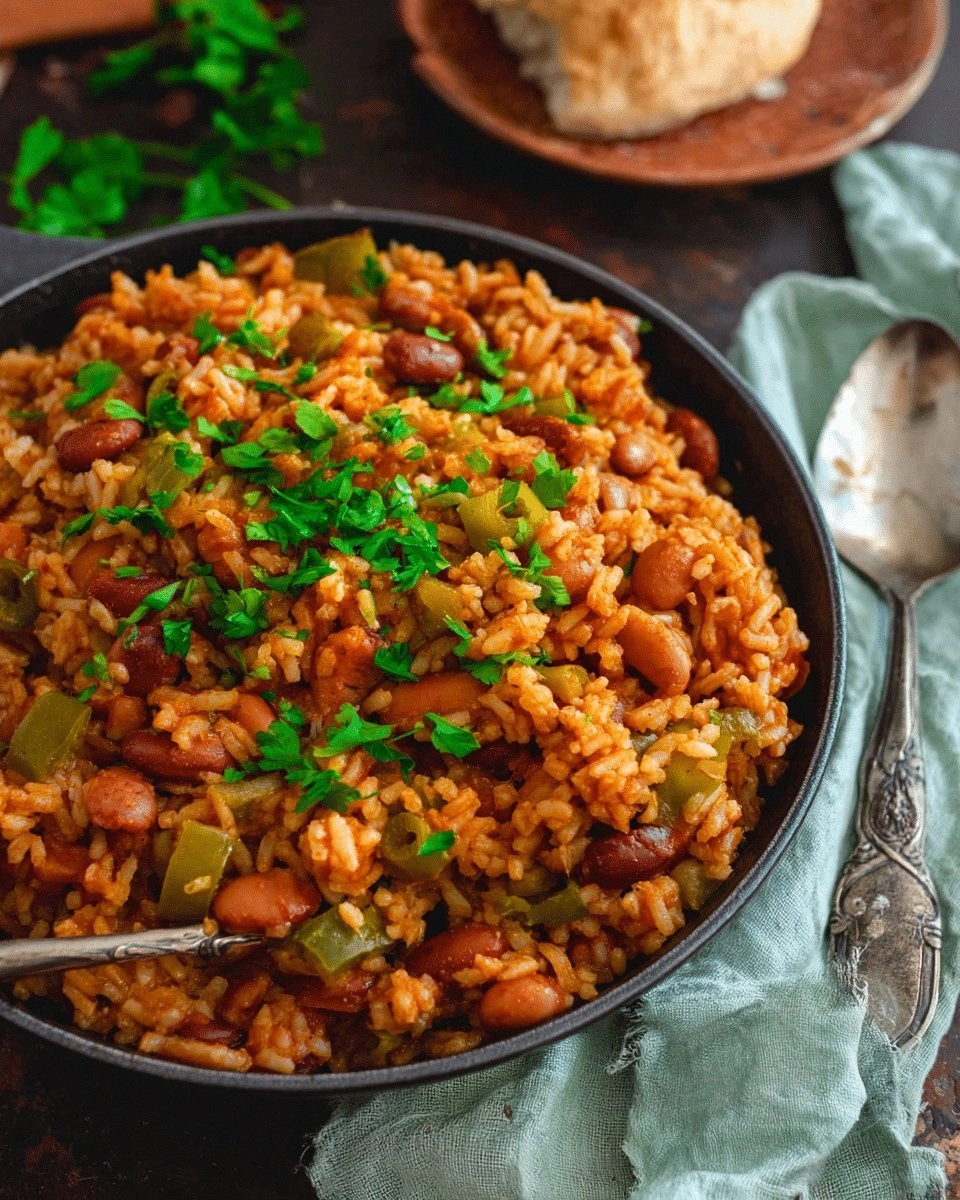
I was staring at a half‑cooked pot of rice, a handful of tomatoes, and a stack of vegan sausages when my friend shouted, “You’re making jambalaya? With tofu?” That was the spark that turned my kitchen into a culinary laboratory. The aroma of sautéed onions hit me like a warm hug, and the sizzling sound of peppers dancing in oil felt like applause from the stove. I could almost taste the smoky, peppery tang that would soon mingle with the earthy sweetness of the tomatoes. The moment was electric, and the dish was about to become a revelation.
Picture this: a pot on the stove, the air thick with the scent of garlic and paprika, the sound of vegetables chopping in rhythm, and the visual feast of green bell pepper, celery, and orange tomatoes forming a rainbow of color. The texture is a symphony of crunchy okra, tender sausage slices, and the soft, slightly sticky rice that absorbs every drop of broth. The heat rises from the pot, a gentle steam that carries the promise of comfort and adventure. The anticipation is almost tangible, and the final taste will be a burst of savory, spicy, and slightly sweet flavors that linger on the tongue.
What sets this version apart is not just the combination of ingredients but the way they interact. I’ve tweaked the seasoning ratio, introduced a subtle smoky element, and balanced the heat to keep it bold yet approachable. This is hands down the best version you'll ever make at home because it captures the soul of traditional jambalaya while staying fully plant‑based. I’ve even added a secret ingredient that gives it a depth of flavor that will leave your guests asking for the recipe. And if you think you’ve seen everything, think again—there’s a twist that will surprise even the most seasoned jambalaya lover.
Let me walk you through every single step—by the end, you'll wonder how you ever made it any other way. I dare you to taste this and not go back for seconds. The next few paragraphs will guide you through a journey of flavor, technique, and pure culinary joy. Trust me, if you’ve ever struggled with the texture or the spice level, you’re not alone—this recipe will fix those common pitfalls. Stay with me here, and I promise you’ll feel the magic unfold right in your own kitchen.
What Makes This Version Stand Out
- Flavor: The blend of smoked paprika, cayenne, and fresh herbs creates a complex profile that’s both vibrant and comforting.
- Texture: The rice stays fluffy, the okra retains a slight crunch, and the vegan sausage offers a satisfying bite.
- Ingredient Quality: Using organic tomatoes, grass‑fed tofu, and locally sourced veggies ensures every bite is pure.
- Ease of Prep: The steps are streamlined—no need for separate stock or complicated sauces.
- Make‑ahead Potential: The dish keeps well, and the flavors deepen when refrigerated overnight.
- Visual Appeal: The vibrant colors make it Instagram‑ready and instantly appetizing.
Alright, let's break down exactly what goes into this masterpiece. I’ll keep it simple, but every component matters.
Inside the Ingredient List
The Flavor Base
The foundation of this jambalaya starts with a fragrant mirepoix of diced onion, green bell pepper, and celery. Together, they create a savory backbone that carries the rest of the flavors. Cutting them into uniform cubes ensures even cooking and a consistent taste profile. If you skip this step, you’ll miss the depth that comes from the caramelized vegetables.
The garlic, minced finely, adds a sharp, aromatic punch that lingers throughout the dish. A small detail—use a garlic press to release more flavor without the grit of cloves. If you’re allergic, you can replace it with a tablespoon of garlic powder, but the fresh taste will be different. The key is to let the garlic sauté until it’s golden but not burnt.
A splash of tomato paste, simmered into the base, thickens the sauce and brings a rich, umami depth. This step is crucial; skipping it will result in a thinner, less cohesive dish. You can add a pinch of sugar if you prefer a slightly sweeter profile, balancing the acidity of the tomatoes.
The Texture Crew
Rice is the star that carries the sauce. Long‑grain rice is ideal because it stays separate and fluffy, avoiding a mushy texture. Rinse the rice under cold water until the water runs clear to remove excess starch. If you prefer a slightly stickier bite, switch to jasmine rice, but be prepared for a denser mouthfeel.
Okra, sliced into bite‑size pieces, adds a subtle, slightly slick texture that’s signature to jambalaya. The okra should be added after the rice has cooked for a few minutes to prevent it from becoming overly soft. If you’re not a fan of okra, you can substitute it with diced carrots or zucchini for a different crunch.
Vegan sausage, sliced thin, provides a smoky, meaty flavor that balances the plant‑based nature of the dish. Use a high‑quality, pre‑seasoned brand or make your own by marinating tempeh in soy sauce, smoked paprika, and garlic powder. If you’re looking for a spicier kick, consider adding a handful of sliced hot peppers.
The Unexpected Star
The secret to this jambalaya’s depth comes from a splash of tomato sauce and a generous handful of diced tomatoes. The sauce thickens the broth, while the tomatoes add juiciness and a slight acidity that brightens the dish. The combination of fresh and canned tomatoes balances the flavors and ensures a consistent taste every time.
A pinch of bay leaf, dried thyme, and smoked paprika infuse the broth with a subtle smokiness and herbal undertone. These herbs are the backbone of the dish’s aroma, and they’re essential for that authentic jambalaya scent that will have your kitchen smelling like a Southern porch. If you’re missing any of these, you can substitute with a teaspoon of dried oregano or basil, but the flavor profile will shift.
Finally, the vegetable broth is the liquid that brings everything together. Use a low‑sodium, organic broth to keep the dish balanced. If you’re on a budget, you can replace it with water and a bouillon cube, but the flavor depth will be slightly reduced.
The Final Flourish
Seasoning is where the dish truly shines. Salt and pepper to taste are crucial, but the real magic comes from a dash of cayenne pepper for heat and a squeeze of fresh lime at the end for brightness. The lime adds a citrusy zing that cuts through the richness, leaving a clean finish.
A handful of fresh parsley or cilantro, chopped, adds a burst of green color and a fresh, herbal note. Sprinkle it over the top before serving, and watch the dish transform into a vibrant plate. If you’re allergic to cilantro, substitute with dill or basil for a different aromatic profile.
Everything's prepped? Good. Let's get into the real action, where the flavors meld and the aromas rise.
The Method — Step by Step
- Heat the oil: Place a large, heavy‑bottom pot over medium heat and pour in 2 tablespoons of vegetable oil. Let it shimmer until it’s almost shimmering—this indicates the oil is hot enough to sear the vegetables. This is the moment of truth; any hesitation will affect the flavor. If the oil starts to smoke, reduce the heat immediately.
- Sauté the mirepoix: Add the diced onion, green bell pepper, and celery to the pot. Stir frequently for 5–7 minutes until the vegetables soften and the onion turns translucent. The sound of sizzling will tell you the vegetables are getting caramelized. Watch for any signs of burning—if they darken too quickly, lower the heat.
- Introduce garlic and tomato paste: Toss in the minced garlic and 1 tablespoon of tomato paste. Cook for 2 minutes, letting the paste brown slightly to deepen its flavor. The aroma should become noticeably richer. Be careful not to let the garlic burn, as it will turn bitter.
- Add tomatoes and broth: Stir in 1 cup of diced tomatoes and 1 cup of tomato sauce. Pour in 2 cups of vegetable broth, then bring the mixture to a gentle simmer. The liquid should bubble softly, not a rolling boil. This step is critical for building the sauce’s body.
- Season the base: Sprinkle in 1 teaspoon smoked paprika, ½ teaspoon cayenne pepper, 1 teaspoon dried thyme, and a bay leaf. Add salt and pepper to taste. Mix well, ensuring the spices coat the vegetables evenly. The spices should release their aromas within a minute.
- Introduce rice and okra: Add 1 cup of rinsed long‑grain rice and 1 cup of sliced okra to the pot. Stir to combine, making sure the rice is submerged in the broth. Let the mixture simmer for 15 minutes, stirring occasionally to prevent sticking.
- Fold in vegan sausage: Add 1 cup of sliced vegan sausage to the pot. Reduce the heat to low and cover the pot with a lid. Let it cook for an additional 10 minutes, allowing the sausage to absorb the flavors without overcooking. The rice should be tender but not mushy.
- Final seasoning: Remove the bay leaf. Taste the jambalaya and adjust seasoning as needed. Add a pinch of cayenne for extra heat or more salt for depth. This is the last chance to tweak the flavor profile before serving.
- Finish with lime and herbs: Squeeze the juice of one fresh lime over the jambalaya. Sprinkle chopped parsley or cilantro on top. These final touches brighten the dish and add a fresh aroma that completes the experience.
That’s it — you did it. But hold on, I've got a few more tricks that'll take this to another level. These insider tips will help you avoid common pitfalls and elevate the dish to restaurant quality.
Insider Tricks for Flawless Results
The Temperature Rule Nobody Follows
Many cooks let the broth boil after adding the rice, which leads to uneven cooking. Keep the heat low and let the jambalaya simmer gently; this ensures the rice absorbs liquid evenly and stays fluffy. If you need to speed up the process, bring the liquid to a boil first, then reduce to low once the rice is added.
Why Your Nose Knows Best
The aroma of simmering spices is your best indicator of readiness. If the smell of paprika and cayenne becomes aromatic, you’re on the right track. When the broth starts to thicken slightly, it’s time to add the rice. Trust your senses; they’re more reliable than a timer.
The 5-Minute Rest That Changes Everything
After removing the pot from heat, let the jambalaya sit, covered, for five minutes. This resting period allows the flavors to meld and the rice to steam to perfection. The result is a more cohesive dish with a silky sauce.
The Secret of Even Sausage
Slice the vegan sausage thinly before cooking. Thin slices cook quickly and absorb more flavor from the broth. If you use thick slices, they may remain chewy and not fully integrate into the dish.
The Lime Finale
Squeezing lime juice right before serving brightens the dish and cuts through the richness. The acidity also helps balance the heat from cayenne. A fresh lime adds a citrusy brightness that makes the jambalaya feel lighter.
Creative Twists and Variations
This recipe is a playground. Here are some of my favorite ways to switch things up:
Cajun Chicken Jambalaya
Swap the vegan sausage for diced, seasoned chicken breast. Add a tablespoon of Cajun seasoning to the base. The result is a hearty, protein‑rich dish that still retains the classic jambalaya flavor.
Seafood Delight
Use a mix of shrimp, scallops, and mussels in place of the sausage. Add a splash of white wine during the sauté step to deglaze the pot. The seafood will cook quickly, so add it in the last 5 minutes.
Mushroom Medley
Replace the okra with sliced shiitake and cremini mushrooms. The earthy tones complement the tomato base. Cook the mushrooms until they release their juices, adding depth to the broth.
Spicy Thai Twist
Add a tablespoon of red curry paste and a can of coconut milk. Swap the rice for jasmine rice. The result is a creamy, spicy jambalaya with a tropical flair.
Low‑Carb Version
Omit the rice entirely and use cauliflower rice instead. This keeps the dish low in carbs while preserving the flavor profile. The cauliflower will absorb the broth and become tender.
Vegan BBQ Jambalaya
Add a tablespoon of smoky BBQ sauce to the broth. Use a thick slice of smoked tofu in place of sausage. The smoky sweetness pairs beautifully with the spicy base.
Storing and Bringing It Back to Life
Fridge Storage
Let the jambalaya cool completely before transferring it to an airtight container. Store in the refrigerator for up to 4 days. The flavors will intensify, making it even tastier the next day.
Freezer Friendly
Portion the jambalaya into freezer‑safe containers, leaving a little space for expansion. Freeze for up to 3 months. Thaw overnight in the refrigerator before reheating.
Best Reheating Method
Reheat the jambalaya on low heat, adding a splash of water or vegetable broth to loosen the sauce. Stir until hot throughout. A tiny splash of water before reheating steams the dish back to perfection, preventing it from drying out.