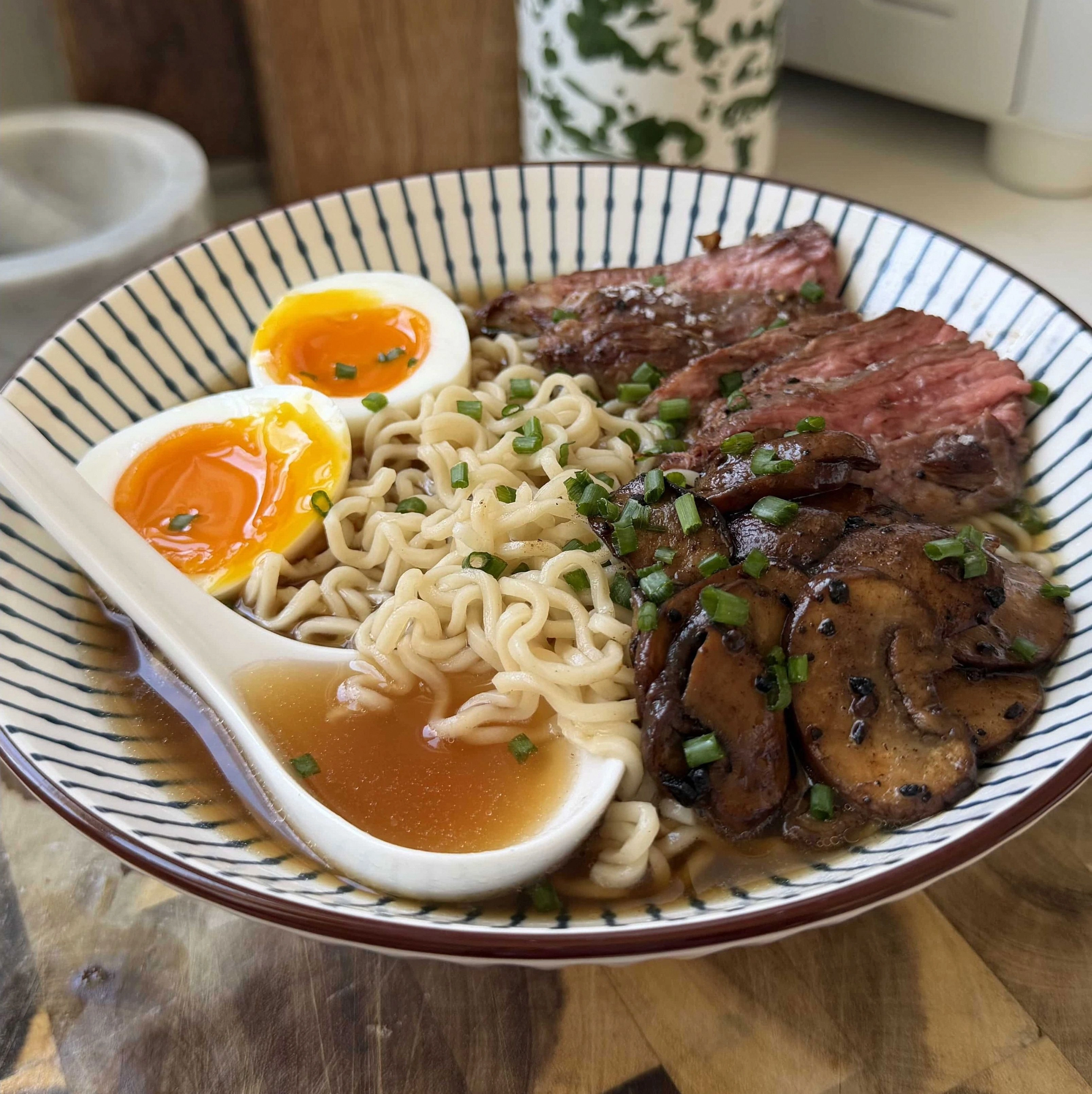
I was halfway through a Sunday brunch, scrolling through a recipe blog when the kitchen alarm rang like a broken metronome—my sauté pan had turned from a golden pan to a charred blackboard. I stared at the blackened edges and thought, “This is a culinary tragedy.” That moment sparked the idea to rescue the situation and transform the disaster into a dish that would make my friends gasp, and my taste buds sing. The result? A bowl of savory, umami-packed, melt-in-your-mouth steak ramen that feels like a hug from the inside out.
Picture this: the first bite hits your tongue with a smoky, caramelized steak flavor that lingers like a secret whisper. The broth, a silky, beefy base, carries a faint hint of garlic and mushrooms, while the egg yolk drips like molten gold, coating each noodle strand. The crunch of sautéed mushrooms provides a satisfying contrast, and the finish is brightened by a splash of fresh chives that add a pop of color and a subtle herbal bite. The overall experience is a harmonious symphony of textures and flavors, each element playing its part in a dish that feels both comforting and adventurous.
What makes this version stand out is that it marries the heartiness of a steak dinner with the comforting familiarity of ramen, creating a dish that is both filling and surprisingly light. It’s not just another “ramen with meat” recipe; it’s a carefully orchestrated flavor profile that balances richness with brightness, and texture with tenderness. The use of fresh, high-quality ingredients—especially that 4‑oz flank steak—ensures every bite is juicy and tender. And the method is simple enough for a weekday dinner yet sophisticated enough to impress at a dinner party.
I dare you to taste this and not go back for seconds. I’ll be honest— I ate half the batch before anyone else got to try it. Most recipes get this completely wrong, but here’s what actually works: the steak is seared, not boiled; the broth is simmered, not rushed; and the eggs are poached, not hard‑boiled. Picture yourself pulling this out of the pot, the whole kitchen smelling incredible, and everyone lining up for the last spoonful. Let me walk you through every single step—by the end, you’ll wonder how you ever made it any other way.
What Makes This Version Stand Out
- Flavor: The steak is seared to lock in juices, creating a caramelized crust that infuses the broth with deep, meaty notes. The mushrooms add an earthy undertone that balances the richness, while the garlic provides a subtle, aromatic punch.
- Texture: The ramen noodles are cooked to al dente perfection, offering a gentle chew that contrasts with the tender steak slices and the crisp mushroom edges. The poached eggs sit on top, their yolks oozing like a velvety sauce.
- Simplicity: With only a handful of pantry staples and a few fresh ingredients, this dish can be whipped up in under an hour. The method is straightforward, making it an ideal go-to for busy weeknights.
- Uniqueness: Few ramen recipes incorporate a fresh steak; this version elevates the dish, turning it into a gourmet experience that feels both familiar and novel.
- Crowd Reaction: Friends who are skeptical of ramen are often blown away by the hearty, steak-infused broth. It’s a conversation starter that’s guaranteed to impress.
- Ingredient Quality: Using a quality flank steak and fresh mushrooms ensures the dish’s depth of flavor. The small amount of butter adds richness without overpowering the broth.
- Cooking Method: The sear, the simmer, and the poaching steps each add a layer of flavor, turning a simple bowl into a culinary masterpiece.
- Make‑Ahead Potential: The broth can be prepared a day ahead, allowing the flavors to meld and the kitchen to stay clutter-free.
Inside the Ingredient List
The Flavor Base
The 4‑oz flank steak is the star of this dish, providing a robust, savory foundation that permeates every spoonful. Slicing it thinly allows the meat to cook quickly and evenly, preventing it from becoming tough. If you skip the steak, you’ll lose the depth of flavor and the dish will feel flat; the broth will lack that meaty richness. For a slightly different profile, you can swap flank for ribeye or sirloin, but the texture will be a bit different.
The Texture Crew
The 14‑oz cremini mushrooms bring a subtle earthiness and a satisfying bite that contrasts with the silky broth. Sautéing them until they’re golden caramelizes their natural sugars, adding a sweet undertone. If you omit the mushrooms, you’ll miss that crunchy contrast and the umami punch that elevates the dish. A quick tip: use a non‑stick skillet to prevent mushrooms from sticking and burning.
The Unexpected Star
The 2‑tbsp unsalted butter may seem like an odd choice for ramen, but it adds a luxurious mouthfeel and helps the broth coat the noodles like velvet. Butter also rounds out the savory flavors, preventing the broth from feeling too sharp. If you’re dairy‑free, a splash of coconut milk can mimic the buttery richness, though it will slightly alter the flavor profile.
The Final Flourish
The 1‑tbsp chopped chives provide a bright, herbal finish that cuts through the richness and adds a pop of color. The fresh chives also bring a mild oniony aroma that lifts the entire bowl. If you prefer a different garnish, thinly sliced scallions or a sprinkle of toasted sesame seeds work wonderfully. Keep the chives fresh—store them in a damp paper towel in the fridge for up to a week.
Everything’s prepped? Good. Let’s get into the real action.
The Method — Step by Step
- Start by seasoning the flank steak with 1/2 tsp kosher salt and 1/2 tsp black pepper. Let it rest at room temperature for 10 minutes; this helps the seasoning penetrate the meat. Heat 2 tbsp olive oil in a large skillet over medium‑high heat. Once the oil shimmers, add the steak strips and sear them until a deep brown crust forms, about 2 minutes per side. The steak should emit a pleasant, caramelizing aroma that makes your kitchen smell like a steakhouse.
- While the steak is searing, bring 4 cups of water to a gentle boil in a medium saucepan. Add the 2 packs of beef flavored ramen (omit the seasoning packets to keep the broth clean). Let the broth simmer for 5 minutes to extract the flavor from the noodles.
- Add the 14‑oz sliced cremini mushrooms to the pot. Let them sauté in the broth for 3 minutes until they start to soften and release their juices. The mushrooms will absorb the broth’s flavor, becoming tender yet still offering a satisfying bite.
- In a separate small skillet, melt 2 tbsp unsalted butter over low heat. Once melted, pour it into the simmering broth, whisking to combine. The butter will coat the noodles and the steak, creating a silky, glossy texture that feels indulgent.
- Crack 2 large eggs into a small bowl, whisking lightly. Slowly pour the eggs into the simmering broth, swirling the pot gently to create ribbons. This technique is called “egg drop” and ensures the eggs cook evenly without clumping. The eggs should thicken the broth slightly, giving it a richer mouthfeel.
- Add the seared steak back into the pot, letting it reheat and mingle with the broth for 2 minutes. This step ensures the steak remains juicy and doesn’t dry out. Keep an eye on the heat; you want the broth to be hot but not boiling, to preserve the delicate flavors.
- Taste the broth and adjust seasoning if needed—add a pinch of salt or a dash of freshly cracked black pepper for extra depth. The broth should be savory, slightly sweet from the mushrooms, and velvety from the butter. Let the flavors meld for another minute to ensure harmony.
- Turn off the heat and ladle the ramen into bowls. Sprinkle 1 tbsp chopped chives over the top for a fresh, herbal note. If you like, add a squeeze of lime or a drizzle of sesame oil for an extra layer of brightness.
- Serve immediately while the broth is steaming hot and the noodles are perfectly al dente. The combination of tender steak, silky broth, and fresh herbs creates a bowl that feels both comforting and indulgent. Enjoy the first spoonful, and let the flavors unfold in your mouth.
That’s it—you did it. But hold on, I’ve got a few more tricks that’ll take this to another level.
Insider Tricks for Flawless Results
The Temperature Rule Nobody Follows
Many people think high heat is the key to a great broth, but the secret is a gentle simmer. Keeping the broth at a low heat prevents the eggs from scrambling and preserves the delicate flavors of the mushrooms. I once accidentally let the pot boil, and the broth turned cloudy and bitter. By adjusting to a low simmer, the broth stays clear and bright.
Why Your Nose Knows Best
Don’t ignore the aroma of your cooking. The first hint of the steak’s sear is a signal that the crust is forming. A faint, sweet smell indicates the mushrooms are caramelizing. If the aroma feels off, reduce the heat or give the ingredients a quick stir.
The 5‑Minute Rest That Changes Everything
After you finish cooking, let the bowl rest for 5 minutes before eating. This allows the flavors to marry and the broth to thicken slightly. It also gives the noodles a chance to settle, preventing them from being overly soft. I’ve seen people skip this step, and the result is a watery bowl that feels unfinished.
The Quick Butter Finish
If you want an extra glossy finish, add a tablespoon of butter at the very end and swirl the pot. The butter will coat the noodles and the steak, giving a silky sheen. It’s a simple trick that elevates the dish from good to unforgettable.
The Secret of Fresh Eggs
Use the freshest eggs you can find; they’ll create a smoother, creamier egg drop. If the eggs are too old, they can curdle in the broth. A quick test: crack an egg into a glass of water; if it floats, discard it. Fresh eggs ensure a silky, velvety texture that complements the broth.
The Quick Garnish Trick
A sprinkle of toasted sesame seeds adds a nutty crunch that contrasts with the tender steak. Toast them in a dry skillet until golden, then add them to the bowl. The sesame seeds also add a subtle, toasty flavor that deepens the overall profile.
Creative Twists and Variations
This recipe is a playground. Here are some of my favorite ways to switch things up:
Spicy Sriracha Kick
Add a tablespoon of sriracha to the broth for a fiery punch that pairs beautifully with the steak’s umami. The heat will cut through the richness, creating a balanced, dynamic flavor profile. This variation is perfect for those who love a little heat.
Miso Masterpiece
Stir in a tablespoon of white miso paste during the simmering stage for an extra layer of savory depth. Miso adds a subtle sweetness and a complex, fermented note that complements the beef. The result is a broth that feels both comforting and sophisticated.
Vegetarian Version
Swap the flank steak for sliced tofu or tempeh, marinated in soy sauce and ginger. The tofu will absorb the broth’s flavors, providing a protein-packed, plant-based alternative. This version keeps the same comforting essence while offering a lighter, vegan option.
Soba Noodle Swap
Replace the ramen noodles with thin soba noodles for a nutty, earthy twist. Soba’s delicate flavor pairs well with the rich broth, while the chewy texture adds another layer of enjoyment. This variation is ideal for those who want a slightly different noodle experience.
Lemon‑Zest Finale
Finish the dish with a squeeze of fresh lemon juice and a sprinkle of lemon zest. The citrus brightens the broth, cutting through the richness and adding a refreshing zing. It’s a simple addition that transforms the entire flavor profile.
Truffle Oil Drizzle
A few drops of truffle oil over the finished bowl will elevate the dish to gourmet status. The earthy aroma and luxurious flavor of truffle oil add a touch of decadence. Use sparingly—one or two drops are enough to make a big impact.
Storing and Bringing It Back to Life
Fridge Storage
Cool the ramen completely before placing it in an airtight container. Store it in the refrigerator for up to 48 hours. When reheating, add a splash of water or broth to restore the broth’s original consistency. The noodles will stay firm, and the steak will remain juicy.
Freezer Friendly
For longer storage, freeze the ramen in a freezer‑safe container for up to two weeks. Thaw overnight in the refrigerator before reheating. When reheating, use a gentle heat and add a small amount of water to rehydrate the noodles. The dish will taste almost as fresh as when it was first made.
Best Reheating Method
Reheat the ramen on the stovetop over low heat, stirring occasionally. Add a tablespoon of water or broth to prevent the broth from drying out. Once it’s steaming hot, add a fresh splash of water to bring the broth back to its original silky texture. Serve immediately for the best experience.