Picture this: I’m standing in a cramped apartment kitchen, a stack of last night’s take‑out on the counter, and a sudden craving for something rich, comforting, and utterly indulgent. I reach for my pantry, pull out a bag of mixed mushrooms, and decide to turn that impulse into a show‑stopping dish. The moment the mushrooms hit the skillet, their earthy aroma fills the room, and the sizzling sound is like applause for a culinary masterpiece in the making. I’ve tried countless pasta recipes that promised “comfort” but delivered bland, soggy noodles, and I’ve been disappointed. This time, I’m determined to break the mold and create a baked mushroom pasta that’s a revelation.
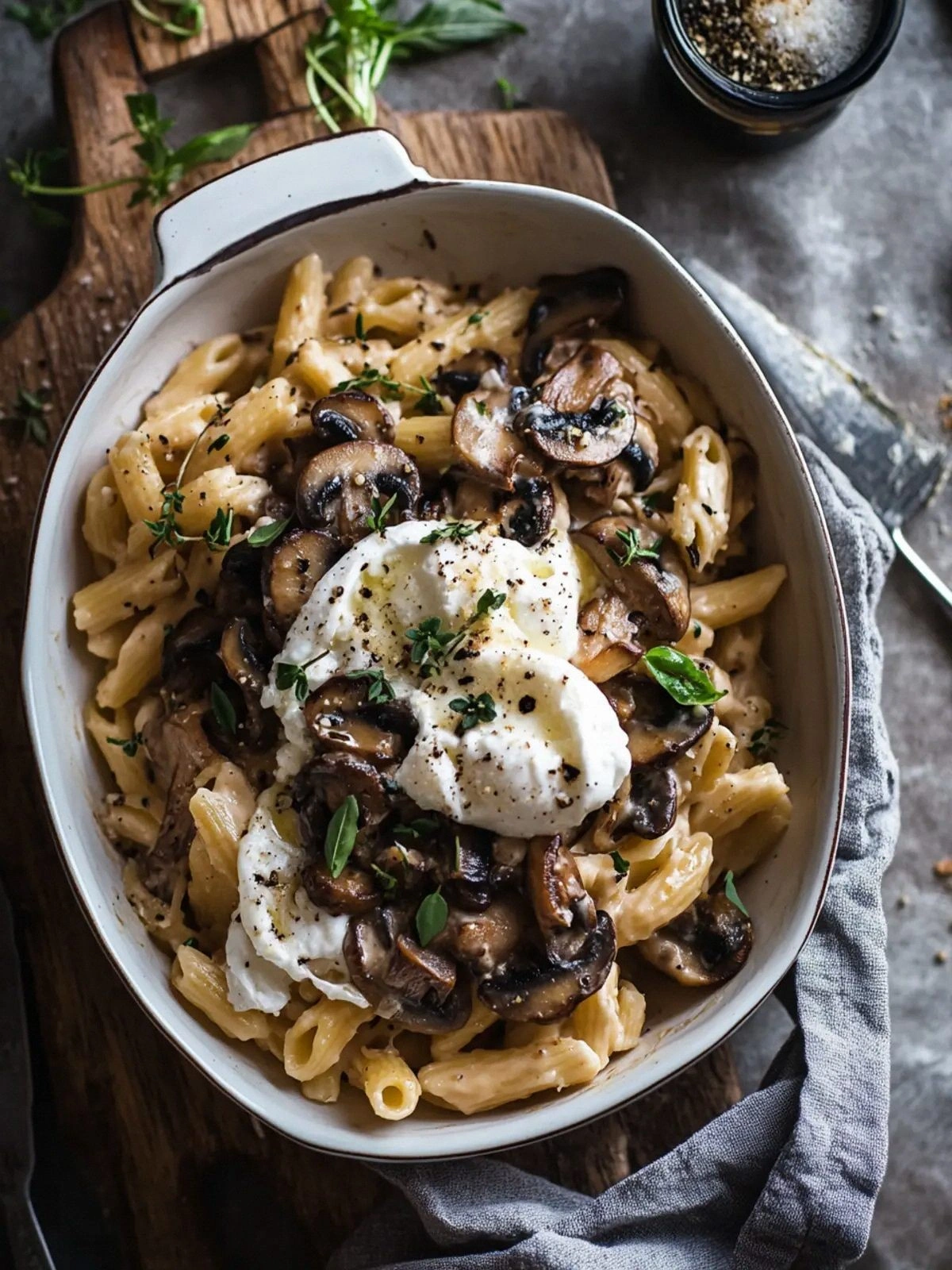
The first thing you notice is the color: a deep, glossy sheen that coats the rigatoni like a velvety sauce. The crunch of the toasted garlic and the subtle heat from the red pepper flakes create a symphony of textures that dance on the tongue. The fresh thyme and rosemary add a fragrant whisper that lingers long after the last bite. And then there’s the burst of citrus from the lemon, brightening the dish and cutting through the richness of the mascarpone and burrata. I dare you to taste this and not go back for seconds.
What sets this version apart is that it doesn’t rely on heavy cream or a pre‑made sauce. Instead, it uses the natural umami of mushrooms, the acidity of wine, and the creaminess of mascarpone to build layers of flavor that deepen with each bite. It’s hands down the best version you’ll ever make at home because it balances indulgence with complexity, and it’s designed to impress even the most discerning palate. The technique of caramelizing the mushrooms before baking ensures that every piece is tender yet slightly crisp, a contrast that most recipes miss. Picture yourself pulling this out of the oven, the whole kitchen smelling incredible, and the table set for a dinner that feels like a celebration.
Let me walk you through every single step—by the end, you’ll wonder how you ever made it any other way. I’ll share my secret hacks, the exact timing to get the sauce just right, and how to finish it with burrata that melts into a silky, decadent topping. I’ll even show you how to keep it fresh for later and how to reheat it without losing that luscious texture. If you’ve ever struggled with baking pasta, you’re not alone—and I’ve got the fix. So, roll up your sleeves, and let’s get cooking.
What Makes This Version Stand Out
- Umami Power: The mixed mushrooms bring a depth of flavor that is far richer than any single variety could provide. Their earthy notes form a robust base that carries the rest of the sauce.
- Texture Contrast: Caramelized mushrooms give a slightly crisp edge while the pasta remains al dente, creating a delightful bite that keeps you coming back for more.
- Minimalist Ingredients: Only a handful of pantry staples and fresh herbs are needed, making this dish accessible and easy to pull together on a busy night.
- Cheese Symphony: The combination of mascarpone, burrata, fontina, and parmigiano reggiano creates a creamy, melty, and slightly nutty finish that feels indulgent without being heavy.
- Wine & Broth Balance: Dry white wine adds acidity and complexity, while mushroom broth enhances the savory profile without overpowering the other flavors.
- Fresh Herb Finish: Thyme and rosemary provide aromatic brightness that lifts the dish and keeps it from feeling too dense.
- Make‑Ahead Friendly: You can assemble the dish a day ahead, refrigerate, and bake right before serving—perfect for dinner parties.
Alright, let's break down exactly what goes into this masterpiece. The next section will dive into each ingredient, why it matters, and how to pick the best ones.
Inside the Ingredient List
The Flavor Base
The dry white wine is the first hero. It deglazes the pan, pulls up all those browned bits, and introduces a subtle acidity that balances the richness of the cheeses. If you’re on a budget, a dry white like Pinot Grigio works fine; just avoid overly sweet varieties that will swamp the dish. Skipping wine will leave the sauce flatter, but you can compensate with a splash of lemon juice and a pinch of salt.
Mushroom broth is the next cornerstone. It adds depth without diluting the sauce. Use a low‑sodium version so you can control the saltiness. If you can’t find broth, a few tablespoons of vegetable stock mixed with a splash of water will do, but the flavor will be a touch lighter. Remember: broth is the backbone that holds everything together.
The Texture Crew
The mixed mushrooms are the star of the show. Combining shiitake, cremini, and button mushrooms gives a complex flavor profile and a range of textures. Choose fresh, firm mushrooms; avoid any that feel slimy or have dark spots. Trim stems if they’re tough, and slice them evenly so they cook uniformly. I always keep a small bowl of olive oil handy; it helps the mushrooms caramelize beautifully.
The rigatoni, penne, or cavatappi are the vessels for the sauce. Each shape has its own charm: rigatoni’s ridges hold sauce like a pocket; penne’s straight tubes trap flavors; cavatappi’s corkscrew shape creates a fun, twisty presentation. Choose one that you love; the difference is subtle, but the pasta’s shape can affect the final mouthfeel.
The Unexpected Star
Burrata cheese is the pièce de résistance. Its creamy interior is a luxurious surprise that melts into the sauce, creating silky pockets of richness. Because burrata is delicate, it’s best added at the very end of baking, just before serving, to keep its texture intact. If you’re a fan of extra creaminess, a dollop of mascarpone can be folded in earlier, but burrata is the true showstopper.
Fresh thyme and rosemary bring herbal brightness. Thyme’s subtle earthiness complements the mushrooms, while rosemary adds a piney, slightly citrusy note. Use fresh leaves, not dried, because they release more aroma. If you’re out of rosemary, a pinch of dried thyme can work, but the flavor will be less vibrant.
The Final Flourish
The cheeses—mascarpone, fontina, and parmigiano reggiano—work together to create a creamy, melty, and slightly nutty finish. Mascarpone adds a velvety smoothness; fontina melts beautifully, giving a mild, buttery flavor; parmigiano reggiano adds a sharp, salty edge. If you can’t find all three, substitute with a blend of cream cheese and shredded mozzarella, but you’ll lose some depth.
Red pepper flakes and a whole head of garlic bring heat and depth. The garlic’s sharpness cuts through the richness, while the pepper flakes give a subtle kick that lingers on the palate. If you’re not a fan of heat, reduce the flakes to a quarter teaspoon, but I’ll bet you’ll miss the extra layer of flavor.
Everything's prepped? Good. Let's get into the real action...
The Method — Step by Step
- Preheat your oven to 375°F (190°C). Bring a large pot of salted water to a boil and cook the pasta according to package instructions until it’s just shy of al dente—about 1–2 minutes less than the recommended time. Drain, reserving a cup of the pasta water, and set aside. This step ensures the pasta will absorb the sauce later without becoming mushy.
- Heat a large, heavy‑bottomed skillet over medium heat. Add 2 tablespoons of olive oil and the whole head of garlic, sliced thin. Sauté until the garlic turns golden and fragrant, about 3 minutes. Remove the garlic slices and set them aside; they’ll be sprinkled over the finished dish for an extra aroma boost.
- Add the mixed mushrooms to the skillet. Season with salt, pepper, and 1 tablespoon of red pepper flakes. Cook, stirring frequently, until the mushrooms release their moisture and start to brown, about 8–10 minutes. The key is to let them caramelize; this deepens their flavor dramatically. Kitchen Hack: If you notice mushrooms steaming instead of browning, increase the heat slightly and give them a chance to dry out.
- Deglaze the pan with 1 cup of dry white wine, scraping up any browned bits. Let the wine reduce by half, about 3–4 minutes. The reduction concentrates the flavor and adds a subtle acidity that balances the creaminess to come.
- Stir in 0.75 cup of mushroom broth and 0.25 cup of butter. Let the mixture simmer for 2 minutes, allowing the butter to melt fully. Watch Out: If the broth is too hot, it can evaporate too quickly, leaving the sauce too thick; keep the heat moderate to maintain the right consistency.
- Fold in the mascarpone, 1 cup of fontina cheese, and 0.5 cup of parmigiano reggiano. Stir until the cheeses melt into a smooth sauce that coats the mushrooms. If the sauce feels too thick, add a splash of reserved pasta water to reach your desired consistency. Kitchen Hack: For a silkier sauce, whisk the cheese mixture before adding it to the skillet.
- Add the cooked pasta to the skillet, tossing gently to coat it with the sauce. If the mixture seems dry, drizzle a little more pasta water. Stir in the fresh thyme leaves and the rosemary sprig, letting the herbs infuse the dish for 1 minute.
- Transfer the entire pasta mixture to a large baking dish. Dot the top with small dollops of mascarpone and spread the burrata cheese evenly. Sprinkle the sautéed garlic slices over the top. Bake uncovered for 12–15 minutes, or until the cheese is bubbly and the edges of the pasta start to crisp slightly. This final bake gives the dish a beautiful golden finish and melds all the flavors together.
That's it — you did it. But hold on, I've got a few more tricks that'll take this to another level. The next section will share insider tips that even seasoned chefs swear by.
Insider Tricks for Flawless Results
The Temperature Rule Nobody Follows
Many people bake pasta at 400°F, but 375°F gives you a gentler heat that prevents the cheese from scorching while still allowing the sauce to thicken. If you’re in a hurry, you can bump the temperature to 425°F for the last 5 minutes, but watch the cheese closely to avoid a burnt crust.
Why Your Nose Knows Best
Before you open the oven door, sniff the dish. A hint of nutty, buttery aroma signals that the cheese is melting properly. If you still smell raw cheese, give it another minute or two. Your nose is the ultimate judge of doneness.
The 5-Minute Rest That Changes Everything
After baking, let the dish rest for 5 minutes. This allows the sauce to settle, making it easier to scoop and ensuring each bite is creamy, not runny. It also lets the flavors mingle and develop a richer profile.
Cheese Placement Matters
Place the burrata on the very top of the dish, not under the pasta. This ensures it melts into a glossy, decadent layer that pulls away from the pasta when you cut into it, creating a dramatic visual and textural experience.
Add a Touch of Citrus
Squeeze fresh lemon juice over the dish right before serving. The acidity cuts through the richness and brightens the overall flavor. If you prefer a more pronounced citrus note, zest a bit of the lemon over the top as a final garnish.
Creative Twists and Variations
This recipe is a playground. Here are some of my favorite ways to switch things up:
Smoky Chipotle Twist
Swap the red pepper flakes for a teaspoon of chipotle in adobo, and add a splash of smoked paprika. The smoky heat pairs beautifully with the earthy mushrooms, giving the dish a southwestern flair.
Pesto Infusion
Stir in 2 tablespoons of basil pesto after adding the pasta to the skillet. The green burst of flavor complements the garlic and gives a fresh, herbaceous twist that feels like spring.
Seafood Surprise
Add 1 cup of cooked shrimp or scallops to the skillet with the mushrooms. The briny seafood pairs perfectly with the creamy sauce, creating a luxurious, restaurant‑style dish.
Vegan Version
Replace all dairy with plant‑based alternatives: use vegan butter, oat milk instead of broth, and a vegan cheese blend. The dish remains creamy and flavorful, proving that indulgence doesn’t require animal products.
Quick & Easy
If you’re short on time, skip the baking step and finish everything on the stovetop. Stir in the burrata last, let it melt into the sauce, and serve immediately. It’s a faster version that still delivers on flavor.
Storing and Bringing It Back to Life
Fridge Storage
Cool the baked pasta completely, then cover it tightly with plastic wrap or a lid and store in the refrigerator for up to 3 days. The cheese will firm up slightly, so a quick reheating will restore its creamy texture.
Freezer Friendly
For longer storage, place the cooled pasta in an airtight container and freeze for up to 2 weeks. When ready to eat, thaw overnight in the refrigerator and reheat in a skillet with a splash of water to keep it moist.
Best Reheating Method
Reheat on the stovetop over low heat, adding a small splash of water or broth to create steam. Stir frequently until the cheese melts and the sauce thickens. Avoid microwaving, as it can separate the cheese and ruin the silky texture.