Picture this: a midnight kitchen, a sizzling pan, and the desperate urge to create something simple yet unforgettable. The glow from the stove lamp painted the walls like a canvas waiting for a masterpiece. I was halfway through a marathon of spreadsheets, my stomach growling louder than a freight train. I knew I deserved a dish that would sing. The moment that turned into a culinary revelation was the smell of garlic frying in olive oil.
I had just finished a long day of meetings, my stomach growled louder than a freight train, and I knew I deserved a dish that would sing. The aroma of garlic and oil curled around me like a fragrant blanket. I imagined the silky strands of pasta dancing in a golden sauce, each bite a burst of Mediterranean sunshine. I realized that what I was craving wasn’t a complex sauce, but a pure, honest, and utterly delicious marriage of simple ingredients. I dared myself to test the limits of this humble dish, and the result is a plate that feels like a warm hug from the inside out.
The scent of garlic frying in olive oil instantly transported me to sun‑kissed Italian kitchens. The sizzle was a metronome, a rhythm that told me the dish was about to begin. I felt the heat rise, the oil shimmering like liquid gold. That moment, I knew, was the foundation of everything that followed. I could taste the future, a promise of flavor waiting to unfold.
I realized that what I was craving wasn’t a complex sauce, but a pure, honest, and utterly delicious marriage of simple ingredients. I dared myself to test the limits of this humble dish, and the result is a plate that feels like a warm hug from the inside out. Let me walk you through every single step — by the end, you'll wonder how you ever made it any other way. The promise is simple: a dish that is as effortless as it is extraordinary. I’m about to show you how to turn a few basic ingredients into a culinary triumph.
What Makes This Version Stand Out
- Flavor Depth: The simple combination of olive oil and garlic creates a sauce that coats each strand of spaghetti like velvet, delivering a punch of umami that lingers long after the last bite. The olive oil’s peppery finish cuts through the garlicky richness, ensuring every mouthful is a balanced orchestra of taste.
- Texture Harmony: The pasta’s al dente bite contrasts with the silky sauce, creating a dance of firmness and smoothness that satisfies the palate. When the noodles meet the oil, they absorb the aroma without becoming soggy, preserving their structural integrity.
- Simplicity at its Finest: No heavy cream, no tomatoes, no fancy herbs—just four core ingredients that work together in perfect synchrony. The minimalism allows each component to shine, making the dish approachable for novice cooks and satisfying for seasoned chefs.
- Ingredient Integrity: By selecting high‑quality olive oil, fresh garlic, and premium pasta, the dish elevates itself beyond a basic comfort meal. The natural flavors of each ingredient are unmasked, offering a culinary experience that feels both authentic and luxurious.
- Speed & Convenience: The entire process takes less than half an hour, making it a go‑to solution for those craving a gourmet meal with minimal prep. The quick turnaround ensures that the flavors are at their peak when you serve.
- Versatility for Every Palate: Whether you prefer a mild, garlicky bite or a spicy kick, this recipe adapts effortlessly. Adding chili flakes, lemon zest, or a splash of white wine can tailor the dish to any mood.
- Crowd‑Pleaser Factor: Friends and family will marvel at how a handful of ingredients can produce a restaurant‑quality plate. The dish’s simplicity invites conversation, while its depth keeps everyone coming back for seconds.
- Make‑Ahead Potential: The sauce’s flavors deepen over time, making it ideal for meal prep. Reheating with a splash of water restores its silky texture, ensuring each serving feels fresh.
Alright, let's break down exactly what goes into this masterpiece...
Inside the Ingredient List
The Flavor Base
At the heart of this dish lies the marriage between olive oil and garlic. Olive oil, chosen for its peppery undertones, acts as a conduit for the garlic’s aromatic oils. Fresh garlic, sliced thinly, releases its sulfur compounds slowly, preventing a sharp bite. The combination creates a sauce that feels both luxurious and approachable. If you skip either component, the dish loses its signature character, becoming a plain pasta without soul.
The Texture Crew
Durum wheat spaghetti provides a firm bite that resists the oil, maintaining structure even after mixing. Boiling the pasta in salted water ensures the noodles absorb flavor from the outset. Reserve a cup of pasta water to adjust consistency later; the starchy liquid binds the sauce to the noodles. If you use fresh pasta, cook it briefly to avoid overcooking, as fresh strands can become mushy quickly. The texture contrast is what makes each bite satisfying.
The Unexpected Star
Parmigiano‑Reggiano or Pecorino Romano adds a savory depth that lingers on the palate. Grated finely, it melts into the hot sauce, creating a subtle umami layer. While optional, the cheese elevates the dish from simple to extraordinary. If you prefer a dairy‑free version, a sprinkle of nutritional yeast offers a comparable nutty note. The cheese’s sharpness balances the oil’s richness, preventing heaviness.
The Final Flourish
Optional touches such as chili flakes, lemon zest, or a splash of white wine add layers of brightness and heat. A pinch of freshly ground black pepper brings a subtle bite that complements the garlic. A drizzle of extra virgin olive oil at the end adds sheen and a final burst of flavor. Herbs like parsley or basil can be tossed in at the last moment to introduce freshness. These finishing touches transform the dish into a personalized masterpiece.
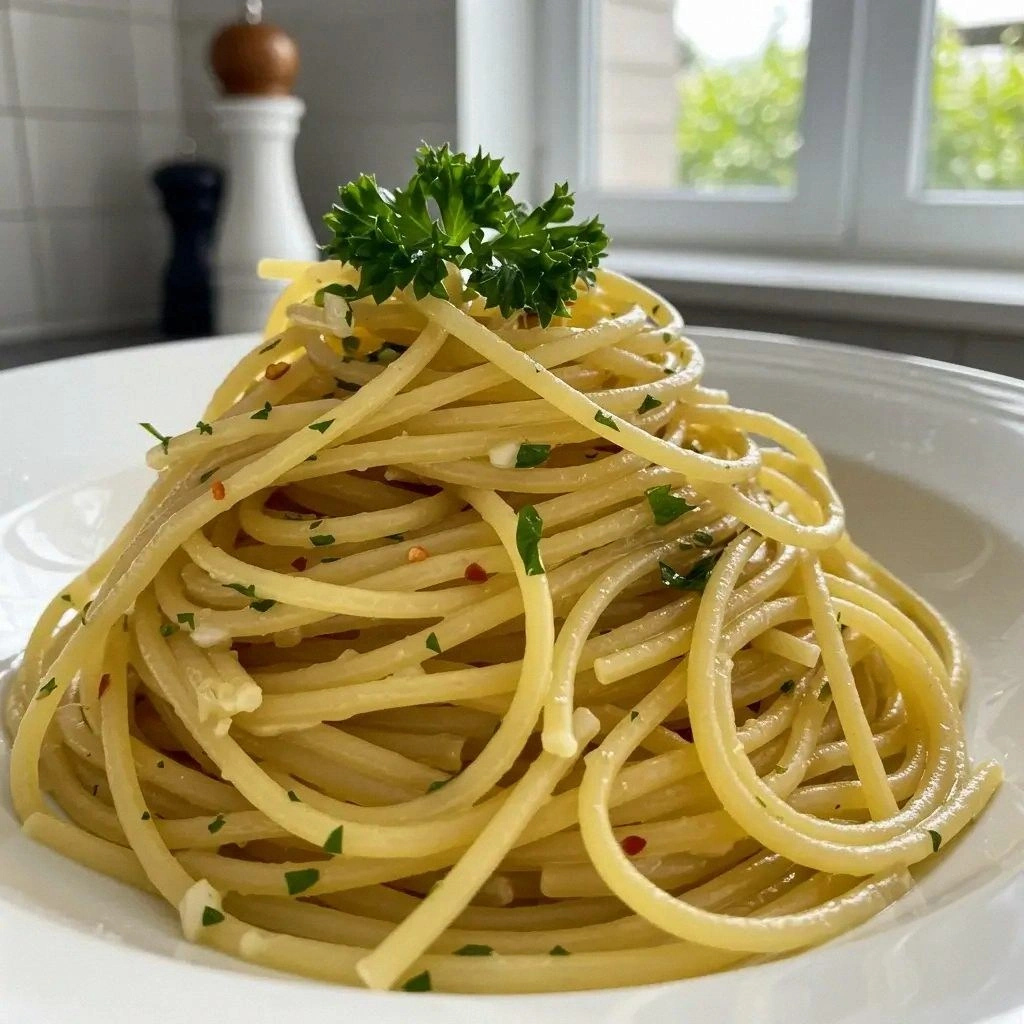
The Method — Step by Step
- Fill a large pot with water, bring it to a rolling boil, and add a generous pinch of sea salt; the water should taste like the sea. Once boiling, add the spaghetti and stir immediately to prevent sticking. Keep the pot uncovered to allow steam to escape and maintain a steady boil. Cook for 8 to 10 minutes, depending on the brand, until the pasta is al dente. When the noodles are ready, reserve a cup of the starchy cooking water before draining.
- While the pasta cooks, peel and slice the garlic into thin ribbons. Thin slices release more aroma without burning quickly, giving the sauce a gentle depth. Set the sliced garlic aside on a small plate; you’ll need it for the next step. A well‑sliced garlic will coat the oil evenly, preventing hot spots. The aroma at this point should already be intoxicating.
- Heat a wide, heavy skillet over medium‑low heat. Add the olive oil and let it warm until it shimmers but does not smoke. Introduce the garlic ribbons, stirring constantly to avoid burning. The garlic should turn golden and release a nutty scent, signaling readiness. This step is critical; burnt garlic can dominate the dish with bitterness.
- Add the drained spaghetti directly into the skillet with the garlicky oil. Toss vigorously so that every strand is coated in the fragrant oil. If the pasta seems dry, splash in a little reserved pasta water to help the sauce cling. Stir until the noodles are glossy and the sauce has settled into a cohesive coat. Keep the heat low to avoid over‑cooking.
- Add the optional cheese, stirring until it melts into the sauce, creating a silky texture. The cheese should coat the noodles without clumping, giving a subtle umami finish. If you prefer a dairy‑free version, sprinkle nutritional yeast for a nutty flavor. Taste the sauce and adjust seasoning with a pinch of pepper if desired. This step adds richness while keeping the dish light.
- Watch Out: If the sauce starts to dry out, add a splash more pasta water or a drizzle of olive oil. Over‑cooking the pasta can cause it to become mushy and lose its al dente bite. Keep the heat low and stir continuously to maintain a silky coat. A little water can revive the sauce’s sheen and prevent it from sticking to the pan. This is the trick that saves many a ruined plate.
- Stir in optional chili flakes for heat or a squeeze of lemon zest for brightness. These additions elevate the flavor profile, making the dish more dynamic. The heat from the chili should be gentle, just enough to warm the sauce. Lemon zest adds a citrusy lift that brightens the oil’s richness. Adjust to taste; a small amount goes a long way.
- Remove the skillet from heat and transfer the pasta to a serving dish. Toss quickly to ensure even distribution of sauce and cheese. The pasta should still be slightly warm, allowing the flavors to mingle beautifully. Garnish with fresh parsley or basil if desired, adding a pop of color and freshness. The final plate should look inviting and fragrant.
- Serve immediately while the pasta is still hot and the sauce is glossy. A quick bite preserves the al dente texture and the aromatic oil. Pair with a crisp glass of white wine for an elevated experience. If you have time, let the dish rest for a minute; the flavors will meld further. Enjoy the moment, savor each bite, and let the simplicity speak for itself.
That's it — you did it. But hold on, I've got a few more tricks that'll take this to another level.
Insider Tricks for Flawless Results
The Temperature Rule Nobody Follows
Cooking pasta over a high flame can cause uneven boiling and sticky noodles. The secret is to maintain a gentle, rolling boil; this keeps the water moving and prevents the strands from clumping. If you notice the water boiling over, lower the heat slightly. A steady boil ensures each noodle reaches the same level of doneness. This simple adjustment saves you from a soggy disaster.
Why Your Nose Knows Best
Before adding the garlic, pause and sniff the oil. A fresh, fruity aroma indicates a good olive oil; a flat scent signals oxidation. The oil’s quality directly affects the dish’s flavor. If you detect a musty note, consider a different bottle. A bright aroma guarantees a brighter sauce.
The 5-Minute Rest That Changes Everything
After draining the pasta, let it sit in the colander for 30 seconds before tossing it with the sauce. This pause allows the noodles to finish steaming, preserving their al dente bite. It also gives the sauce a chance to coat each strand evenly. A short rest can make the difference between a good and a great dish.
Keep It Light, Keep It Bright
When adding cheese, use a small amount to avoid overpowering the garlic. A thin layer of Parmigiano‑Reggiano provides depth without drowning the oil. If you’re vegan, substitute with a plant‑based parmesan alternative. The key is balance: enough to enrich, not to eclipse.
Serve Immediately, or Reheat Wisely
Reheating pasta can cause it to become rubbery. To revive, add a splash of cold water or broth and reheat gently over low heat. The liquid will rehydrate the noodles, restoring their original texture. Stir constantly to prevent sticking. This trick keeps leftovers delicious.
Don’t Forget the Finish
A final drizzle of high‑quality olive oil right before serving adds sheen and a burst of flavor. The oil’s aroma will intensify, making the dish feel freshly prepared. This simple flourish transforms the plate into a gourmet experience.
Creative Twists and Variations
Spicy Sriracha Kick
Swap the chili flakes for a spoonful of sriracha, giving the dish a bold, sweet heat. The sauce becomes a fusion of Italian and Southeast Asian flavors. This variation is perfect for heat lovers who crave a kick.
Lemon‑Herb Zest
Add zest from a whole lemon and a handful of fresh thyme. The citrus brightens the oil, while thyme adds an earthy undertone. This version feels like a breezy summer picnic.
Seafood Surprise
Sauté shrimp or scallops in the garlic‑oil before adding the pasta. The seafood absorbs the garlicky flavor and adds a luxurious protein. Serve with a squeeze of lemon for a refined touch.
Vegan Parmesan
Replace dairy cheese with nutritional yeast or a vegan parmesan blend. The nutty flavor mimics the umami of real cheese without dairy. This twist makes the dish inclusive for all diets.
Sun‑Dried Tomato Crunch
Stir in chopped sun‑dried tomatoes for a chewy, sweet burst. The tomatoes pair beautifully with the garlic, creating a layered flavor profile. This variation is ideal for those who enjoy a bit of texture.
Truffle Oil Finish
Finish the dish with a few drops of truffle oil for an earthy, luxurious aroma. The truffle’s depth elevates the simple sauce into a gourmet experience. Serve immediately to capture the aroma.
Storing and Bringing It Back to Life
Fridge Storage
Store cooked pasta in an airtight container in the refrigerator for up to 3 days. Keep the sauce separate until ready to serve to avoid sogginess. When reheating, sprinkle a dash of water to rehydrate the noodles. Reheat gently on low heat, stirring constantly. The pasta will regain its al dente texture and aromatic oil.
Freezer Friendly
Freeze individual portions in freezer‑safe bags for up to 2 months. Thaw overnight in the refrigerator, then reheat with a splash of water or broth. Avoid over‑cooking; the pasta should be warmed, not boiled. The sauce will maintain its silky coating if reheated properly. This method makes meal prep effortless.
Best Reheating Method
Reheat in a skillet over low heat, adding a tablespoon of water or olive oil to keep the sauce from drying. Stir frequently to distribute heat evenly. The pasta should be hot and glossy before serving. A quick reheat preserves the dish’s original flavor and texture. This technique ensures leftovers taste as fresh as the first plate.